Could Hydrothermal Vents Have Supported Life on Mars?
Could Hydrothermal Vents Have Supported Life on Mars?
Ancient Mars may once have contained environments resembling Earth’s hydrothermal vents. Driven by heat, water, and chemical reactions beneath the surface, these systems are among the leading settings scientists study when investigating the origin of life.
Hydrothermal environments combine several ingredients associated with habitability: liquid water, mineral surfaces, chemical gradients, and energy. If ancient Mars hosted similar systems, the planet may have supported prebiotic chemistry, the chemical processes that produce increasingly complex molecules before biology appears.
This possibility is not evidence that life existed on Mars. Scientists have found geological evidence of ancient water, volcanic activity, and organic compounds, but no confirmed Martian fossils, cells, or biological activity.
- Habitability evidence shows that an environment could have supported life.
- Organic chemistry evidence shows that carbon-based compounds or related chemical processes occurred.
- Biosignature evidence may indicate life but requires careful testing.
- Confirmed life would require multiple independent lines of evidence that exclude nonbiological explanations.
The central question is whether ancient Mars offered localized environments where water, heat, minerals, and chemical energy interacted for long enough to support life-related chemistry.
What Are Hydrothermal Vents?
How Hydrothermal Vents Form on Earth
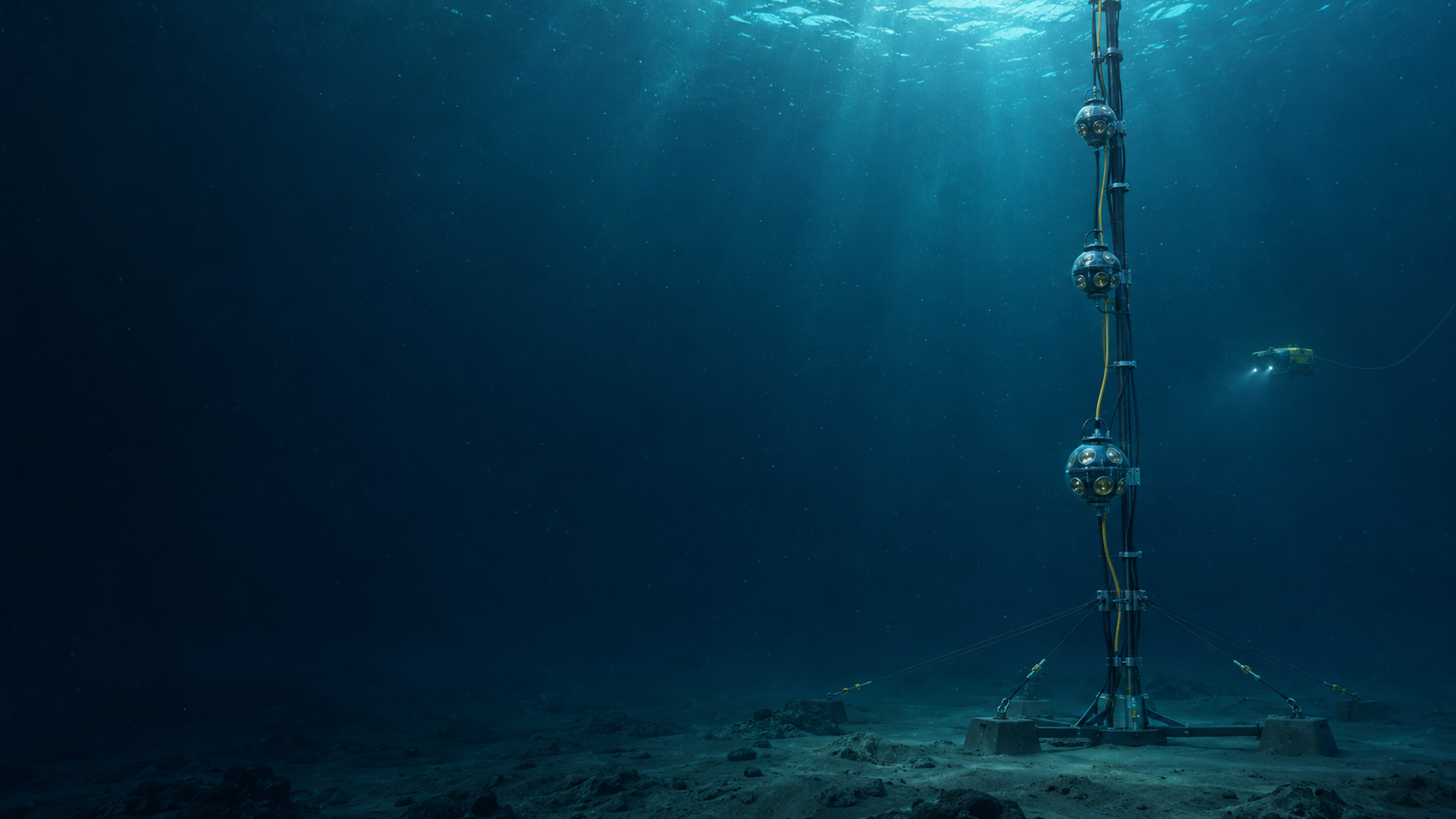
Hydrothermal vents are openings in the seafloor where heated, mineral-rich water enters colder surrounding water. Seawater can seep through cracks in oceanic crust, encounter hot rock or magma, dissolve chemical compounds, and rise back toward the seafloor.
When the hot fluid meets cold seawater, dissolved minerals can precipitate. Some vents form tall, dark chimneys called black smokers, which release extremely hot, metal-rich fluids that may contain sulfur and other elements.
Alkaline hydrothermal vents release less acidic fluids. Their porous mineral structures and chemical gradients have attracted particular attention in origin-of-life research. The pores may act as natural compartments, while differences in acidity and chemical concentration can provide energy for chemical reactions.
Hydrothermal systems do not require sunlight. Their energy comes from geological heat and chemical reactions between water and rock, making them important in the search for life beyond Earth.
Why Hydrothermal Vents Could Support Life
Hydrothermal vents provide several conditions that living systems need or may have needed during their emergence:
- Liquid water as a solvent.
- Heat to accelerate chemical reactions.
- Mineral surfaces that can catalyze reactions.
- Chemical gradients that provide usable energy.
- Elements such as hydrogen, carbon, sulfur, and iron.
- Porous structures that can concentrate molecules.
Mineral pores and vent structures could have concentrated dilute molecules in small spaces. Iron- and sulfur-bearing minerals may also have helped transform simple compounds into more complex ones.
Chemical gradients are especially important. A gradient exists when the concentration of a substance or the acidity differs between two connected environments. Modern organisms use gradients across cell membranes to generate energy. Some origin-of-life models propose that natural mineral compartments in alkaline vents could have performed a similar function before biological membranes evolved.
Modern vent ecosystems demonstrate that life can operate without sunlight. Microbes use chemosynthesis to obtain energy from hydrogen, sulfur, methane, iron, and other compounds. This does not prove that life began at vents, but it shows that darkness does not eliminate habitability.
Hydrothermal Vents and the Origin of Life on Earth
Hydrothermal vents are one leading hypothesis for the origin of life on Earth. Other proposals focus on shallow ponds, tidal environments, volcanic land, ice, or impact-generated systems. No single model has been confirmed.
Vents remain important because they combine water, energy, and reactive chemistry in one setting. They can also operate beneath a planet’s surface, where they are protected from ultraviolet radiation and changing atmospheric conditions.
Researchers continue to study whether vent minerals could have helped assemble organic molecules, create primitive compartments, or support early forms of metabolism. The evidence does not establish a complete pathway from nonliving chemistry to the first cell. It shows that hydrothermal systems provide plausible laboratories for investigating that transition Source 9.
Could Ancient Mars Have Had Hydrothermal Environments?
Mars Was Once Wetter
Modern Mars is cold, dry, and exposed to intense radiation. Its surface pressure is too low for stable liquid water across much of the planet today. Ancient Mars was different.
Orbital observations and rover investigations have revealed river channels, lake basins, deltas, sedimentary rocks, and minerals formed through water–rock reactions. These features indicate that liquid water once flowed or collected at the surface, while groundwater may have persisted below it.
Water alone does not prove habitability. A habitable environment also needs energy, chemical building blocks, and sufficient stability. Ancient Mars may not have been uniformly warm and wet; it may instead have experienced intermittent surface water, regional climates, groundwater circulation, and localized environments around volcanoes or impact sites.
Volcanic Activity Could Have Supplied Heat
Mars has extensive volcanic features and a long history of magmatic activity. Magma and hot rock could have heated groundwater beneath the surface.
The process may have resembled hydrothermal circulation on Earth:
- Water entered fractures in the crust.
- Hot rock or magma raised its temperature.
- The water reacted with surrounding minerals.
- Dissolved elements entered the fluid.
- Heated fluid moved through fractures and porous rock.
- Cooling caused new minerals to form.
On Mars, such systems may have been buried groundwater networks, volcanic aquifers, or mineral-rich zones beneath ancient lakes rather than open-ocean vents.
Impact events could also have generated hydrothermal systems by fracturing rock, producing heat, melting ice or groundwater, and creating temporary circulation. Researchers have proposed that ancient Mars may have hosted environments resembling Earth’s hydrothermal vents Source 1.
Underground Environments May Have Offered Protection
The Martian surface receives damaging radiation, experiences extreme temperature changes, and has a thin atmosphere. Surface chemistry is also strongly oxidizing in places, which can break down organic compounds.
Rock and sediment can provide protection. A buried hydrothermal environment would be shielded from some radiation and could maintain more stable temperatures than the surface. Groundwater circulating through fractures might also preserve chemical energy and dissolved compounds.
Ancient microbes, if they existed, may have left better-preserved evidence below the surface. However, no subsurface life has been confirmed.
Evidence for the Mars Hydrothermal Hypothesis
Geological Evidence of Water–Rock Interaction
Some Martian minerals formed when water reacted with volcanic rock. Their composition can indicate whether ancient water was acidic or alkaline, oxidizing or reducing, and relatively warm or cool.
Mineral veins, clay minerals, carbonates, sulfates, and other altered materials can help identify ancient fluid pathways. None independently proves life. They show that water and chemically active rock interacted under conditions that may have supported habitability.
Ancient Volcanism and Impacts
Volcanic regions provide potential heat sources and fractured pathways for groundwater. Impact craters can create similar conditions for shorter periods. A site becomes more compelling when it contains altered minerals, water-deposited sediments, carbon-bearing compounds, and chemical gradients.
Even then, the conclusion remains that the site was potentially habitable, not that it hosted life.
Chemical Ingredients for Prebiotic Reactions
Scientists have detected carbon-bearing compounds on Mars and in Martian meteorites. Organic molecules can form through nonbiological processes involving water, minerals, radiation, and atmospheric chemistry.
Organic means carbon-based; it does not mean biological. A molecule can be produced by geology, chemistry, or life. A biosignature is a feature that may indicate biological activity but must be evaluated against nonbiological explanations.
Hydrothermal systems could have concentrated organic compounds and transformed them through heat and mineral catalysis. They might also have supplied hydrogen and other chemicals useful in prebiotic reactions. These possibilities strengthen the case for ancient Mars as an astrobiology target, but they do not establish the origin of Martian life.
What Researchers Are Actually Claiming
The cautious scientific claim is that ancient Mars may have offered environments capable of supporting life-related chemistry. Scientists have not observed a Martian vent directly, reconstructed a complete Martian hydrothermal system, or identified a confirmed biosignature.
Studies of Earth’s deep-sea volcanoes help researchers identify mineral textures, chemical patterns, and biological signals that could guide the search for life elsewhere. Discover Magazine has described how extreme deep-sea volcanic environments can provide clues for recognizing life-supporting processes beyond Earth Source 3.
Lessons From Earth’s Deep-Sea Volcanoes
Earth provides accessible examples of life surviving heat, pressure, darkness, and chemical stress. Researchers can sample vent fluids, minerals, microbial communities, and sediments. These studies help mission planners select instruments and identify promising rocks while showing how nonbiological processes can imitate possible biosignatures.
Scientists examine:
- Mineral textures associated with microbial activity.
- Organic compounds produced or modified by organisms.
- Isotopic patterns.
- Chemical gradients.
- Relationships between microbes and mineral surfaces.
Earth and Mars differ in atmospheric pressure, gravity, water stability, radiation exposure, geological history, and climate. Earth analogues guide hypotheses and instrument design, but they cannot prove that a Martian mineral formed biologically or that a site contained a vent.
Could Life Have Originated on Mars?
Hydrothermal environments could potentially provide liquid water, chemical building blocks, sustained energy, concentrated molecules, and environmental stability. The exact transition from chemistry to biology remains unresolved, however. A habitable setting may support complex chemistry without producing life.
Ancient Earth and Mars both experienced volcanism, impacts, water-related processes, and chemically active minerals. Mars is valuable for comparison because it has preserved ancient surfaces that Earth’s active geology has altered or erased.
Scientists still do not know how long liquid water remained available on Mars, how stable its atmosphere was, or whether hydrothermal environments lasted long enough for life to emerge. Evidence of a suitable environment is not evidence of biology.
Where Should Scientists Look?
Ancient Lakebeds and Sedimentary Deposits
Former lakes, river deltas, and sedimentary basins can preserve minerals and organic compounds transported or concentrated by water. The most promising sites may combine sedimentary evidence of water with nearby volcanic or geothermal alteration.
Volcanic Regions and Subsurface Fractures
Volcanic terrains may preserve altered minerals, veins, and fluid pathways. Subsurface targets are difficult to reach but may protect ancient compounds from radiation and oxidation.
Impact Craters
Impact craters can create temporary heat, meltwater, and fractured rock. Their interiors may preserve hydrothermal alteration and water–rock reactions, even if the systems were relatively short-lived.
How Future Missions Could Test the Hypothesis
Future instruments can search for mineral assemblages formed by heated water, carbon-bearing compounds, sulfur and iron chemistry, hydrogen-rich reactions, and isotopic fractionation. Interpretation will require geological context because nonbiological processes can produce similar features.
Returned samples could be examined with advanced microscopes, mass spectrometers, isotope analysers, and other laboratory equipment. Sample return would allow multiple independent teams to study the same material, but contamination controls would be essential. Returned samples could improve the evidence without guaranteeing a simple answer.
Drilling could access material shielded from radiation, oxidation, and surface temperature changes. Technical challenges include drilling depth, energy supply, robotic reliability, planetary protection, and sample handling.
What Would Count as Evidence of Life?
Potential biosignatures include:
- Specific molecular patterns.
- Cellular or fossil-like structures.
- Consistent isotopic fractionation.
- Chemical distributions difficult to explain through geology alone.
- Organic compounds preserved within a relevant mineral and environmental context.
No single feature is automatically conclusive. Scientists would seek reproducible observations, multiple independent biosignatures, and a clear geological setting. They would also test alternatives involving volcanism, impacts, radiation, water–rock reactions, and contamination.
A single organic molecule, unusual mineral, or possible microstructure would not prove that Mars once hosted life. A stronger case would connect biology-like chemistry with physical structures, isotopic evidence, and a plausible environment.
Broader Meaning for Astrobiology
Astrobiology studies the origin, evolution, distribution, and potential existence of life in the universe. It combines astronomy, biology, chemistry, geology, and planetary science Source 5.
Mars preserves a record of planetary change. Its rocks may show how a once-wetter world lost surface habitability and whether life-related chemistry continued underground.
If life began independently on Mars, the discovery would suggest that life may emerge more readily when water, energy, and chemical building blocks coincide. If Mars never hosted life, the result would still clarify how long water persisted, which chemical pathways operated, and why Earth remained habitable while Mars became cold and dry.
Conclusion: A Plausible Environment, Not Proof of Life
Ancient Mars may have hosted hydrothermal vent–like environments associated with volcanism, impacts, groundwater, and water–rock reactions. These systems could have supplied liquid water, heat, minerals, chemical gradients, and subsurface protection.
The evidence supports a plausible setting for prebiotic chemistry and ancient habitability. It does not prove that life originated on Mars, survived there, or exists beneath the surface today.
The next step is to identify the best-preserved hydrothermal deposits and examine them for connected geological, chemical, and biological signals. Mars may preserve clues to whether life is a rare accident or a recurring planetary process.
Frequently Asked Questions
Did Mars have hydrothermal vents like Earth?
Researchers have proposed ancient Martian hydrothermal systems rather than confirmed modern seafloor vents. Mars may have supported heated groundwater systems associated with volcanic activity or impacts.
Why are hydrothermal vents important to the origin of life?
They combine liquid water, heat, minerals, and chemical gradients. Mineral surfaces may concentrate and catalyze reactions involving organic molecules. Vents are one possible setting for the emergence of life, not the only hypothesis.
Does evidence of water on Mars prove that life existed?
No. Water is necessary for known life but does not establish biological activity. Scientists also need evidence of suitable chemistry, energy sources, preservation, and potential biosignatures.
Could life still exist beneath the Martian surface?
The subsurface may protect organic material or organisms from radiation and extreme temperature changes. Any surviving life would likely require accessible liquid water or another stable environment. No confirmed subsurface life has been detected.
What evidence would prove that Mars once hosted life?
Strong evidence would require multiple independent biosignatures, such as biological structures, distinctive chemistry, and consistent isotopic patterns. Researchers would also need to rule out geological processes and contamination.
How will future Mars missions test the hydrothermal vent theory?
Missions can examine altered minerals, volcanic deposits, sedimentary rocks, impact craters, and subsurface materials. Laboratory analysis of returned samples could provide more sensitive tests. The strongest result would connect geological evidence of hydrothermal activity with well-preserved potential biosignatures.