Japan’s MMX Mission to Phobos: Goals and Science
Japan’s MMX Mission to Phobos: Goals and Science
Japan’s Martian Moons eXploration mission, or MMX, is a planned robotic sample-return mission led by the Japan Aerospace Exploration Agency (JAXA). It will travel to Mars, study its moons, collect material from Phobos, and return the sample to Earth for laboratory analysis.
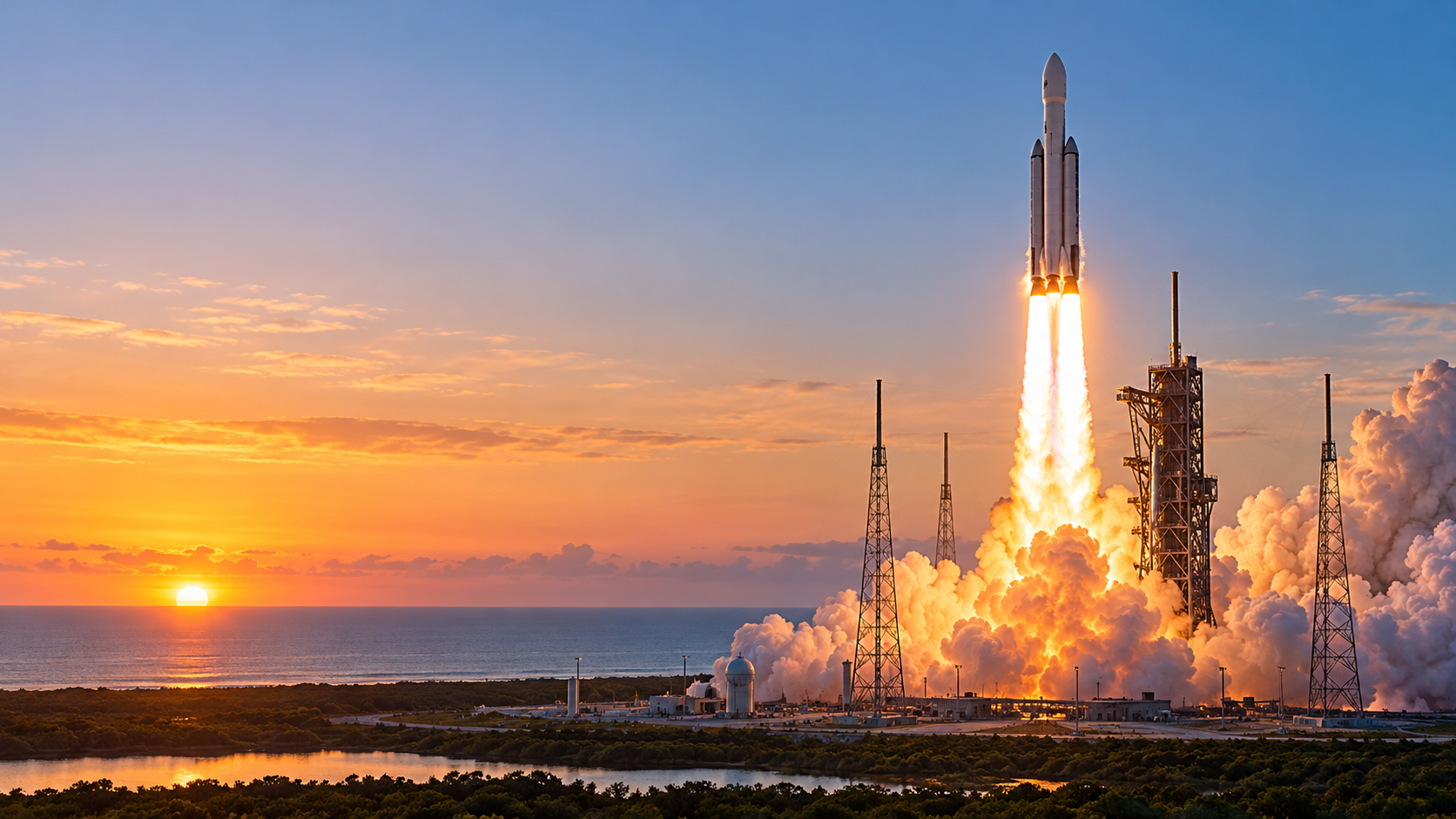
Although some recent reports describe the mission as already launched, official mission information identifies MMX as a future mission under development. JAXA has associated launch planning with the fiscal year 2026 timeframe. The launch date, launch vehicle, spacecraft specifications, and sample-return schedule should therefore be treated as unconfirmed unless updated by JAXA.
MMX is one of the decade’s most important planned planetary-science missions. Its results could clarify how Phobos formed, how material moves through the Mars system, and how small moons evolve around planets.
What Is the MMX Mission?
MMX will focus on Phobos, the larger and closer of Mars’s two moons. The spacecraft is designed to operate in the Mars system, observe Phobos, collect surface material, and return the sample to Earth.
The mission’s broad sequence is expected to include:
- Launch from Earth.
- Cruise through interplanetary space to Mars.
- Study Mars, Phobos, and Deimos.
- Collect at least one sample from Phobos.
- Return the sample to Earth for laboratory analysis.
JAXA identifies the origin and evolution of the Martian moons as central scientific objectives. NASA likewise describes MMX as a mission intended to investigate Phobos and Deimos while returning a Phobos sample to Earth. JAXA mission information and NASA mission information provide current institutional context.
MMX will not primarily land on Mars. It will investigate a natural satellite of Mars, which may contain material from Phobos itself, Mars, and possibly the asteroid population.
Why Is Phobos Important?
Phobos is a small, irregular moon orbiting close to Mars. Its unusual appearance and uncertain origin have made it a long-standing target for planetary research.
Scientists have proposed several explanations for its formation. Phobos may be an asteroid captured by Mars, material formed within the Martian system, or debris produced by a major impact on Mars. Remote observations have not resolved the question.
A returned sample could provide stronger evidence than remote measurements alone. Large impacts on Mars may have ejected rock and dust into space, some of which could have settled on Phobos. The moon may therefore preserve material from multiple sources.
The European Space Agency identifies Phobos as a key target for understanding the origin of the Martian moons and the evolution of the Mars system. ESA mission information
Why Does Sample Return Matter?
Spacecraft instruments can take images and measure minerals, chemistry, radiation, and surface structure. However, their mass, power, temperature, communications, and operating time are limited.
Laboratories on Earth offer greater flexibility. Researchers can:
- Use many types of instruments.
- Repeat measurements and verify results.
- Compare individual grains and minerals.
- Apply analytical methods developed years later.
- Share portions with research teams worldwide.
- Preserve material for future generations.
Laboratory measurements may reveal chemical and isotopic differences that indicate where the material formed and whether it experienced heating, melting, radiation, or chemical alteration. Grain shape, internal structure, mineral boundaries, trapped gases, and microscopic impact damage could also help reconstruct Phobos’s history.
The sample will not answer every question by itself. Scientists must combine laboratory results with spacecraft observations, computer models, and data from previous Mars missions.
What Could the Sample Reveal?
Phobos’s Origin
Researchers will compare the sample with asteroid materials, Martian rocks, and models of impact-generated debris.
A similarity to certain asteroid classes could support the capture theory. Chemical or isotopic similarities to Mars could indicate a closer relationship with the planet. Evidence of impact-generated material could support a formation scenario involving Martian debris.
The result may be complex. Phobos could contain indigenous material mixed with dust delivered from Mars or from space.
Martian Material
Large impacts can eject Martian rock and dust into space. Some of that material may travel through the Martian system and settle on Phobos.
If MMX identifies Martian particles, the sample could provide an indirect way to study Mars. Their abundance, condition, and distribution remain unknown and should not be treated as guaranteed discoveries.
Space Weathering
Phobos lacks a substantial atmosphere and global magnetic shield. Its surface is exposed to solar radiation, charged particles, micrometeoroids, and the environment around Mars.
These processes can alter the color, texture, chemistry, and structure of surface grains. Laboratory results could improve scientists’ understanding of space weathering on asteroids and moons.
How Will MMX Return a Sample?
Travel to Mars
During the cruise phase, mission controllers must manage power, communications, navigation, thermal conditions, and spacecraft health. Signals between Earth and Mars take time to travel, so the spacecraft must perform many operations autonomously.
The exact launch date and launch vehicle should be confirmed through updated JAXA documentation. Reports describing a completed launch do not match the mission’s stated development status.
Observation Before Sampling
Before attempting surface contact, MMX will need to examine Phobos in detail. Observations can help identify terrain, mineral differences, boulders, slopes, craters, and areas with suitable loose material.
Mission plans may change during development, testing, and launch preparation. Specific instruments and operational phases should therefore be described with reference to current technical documentation.
Collection and Storage
Phobos’s weak gravity creates special sampling challenges. A spacecraft that touches the surface could bounce, drift, or disturb nearby dust.
The sampling system must contact the surface, acquire material, and place it in a secure container. Engineers must also limit contamination from the spacecraft, Earth, and other sources. Researchers will document the collection location and handling history so that laboratory results remain linked to the sample’s physical context.
Return to Earth
After operations around Mars, the spacecraft must depart the Martian system and begin the journey home. The sample container must remain secure during cruise, survive atmospheric re-entry, and be recovered under controlled conditions.
A successful return requires accurate navigation, sample protection, precise Earth targeting, safe re-entry, and proper recovery. The sample capsule and recovery process are as important as the sampling mechanism.
International Contributions
MMX is an international project. France and Germany are contributing technology and scientific expertise, while NASA is involved in aspects of mission planning and instrumentation. The European Space Agency has also identified European participation in spacecraft systems and scientific investigation.
International cooperation combines engineering, navigation, instrumentation, planetary science, and operational experience. It also creates challenges involving technical standards, schedules, testing, data systems, and decision-making. Individual contributions should be confirmed through current agency documentation before publication.
Main Technical Challenges
Low Gravity
Phobos’s weak gravity makes surface operations difficult. Contact dynamics, dust movement, navigation, and sampling force must be carefully controlled.
Communication Delays
Mars is too distant for real-time control. MMX will need autonomous systems capable of executing commands, assessing conditions, and protecting the spacecraft when direct instructions are unavailable.
Contamination Control
Earth-based contamination could obscure the sample’s original chemistry. The returned material must be handled according to appropriate planetary-protection procedures. Exact protocols should be confirmed through JAXA and partner-agency documentation.
Mission Duration
MMX will pass through multiple high-risk phases: launch, cruise, arrival at Mars, Phobos operations, sampling, departure, Earth return, re-entry, and recovery. The mission’s scientific value depends on the entire sequence succeeding.
How MMX Builds on Japan’s Experience
Japan has substantial experience with small-body exploration and sample return. The Hayabusa and Hayabusa2 missions demonstrated navigation near small objects, surface operations, sample collection, and capsule recovery.
Hayabusa2 returned samples from the asteroid Ryugu in 2020. JAXA reported that the mission delivered carbon-rich material for detailed study. Hayabusa2 mission information
Phobos presents a different environment because it orbits Mars and is affected by the planet’s gravity and surrounding space environment. Nevertheless, earlier missions provide valuable experience in navigation, sampling, capsule design, and recovery.
Why MMX Matters
Most Mars missions study the planet’s atmosphere, surface, interior, or geological history. MMX will investigate the wider Mars system through one of its moons.
The mission could advance research into:
- The formation of moons around terrestrial planets.
- Material exchange between planets and satellites.
- Asteroid capture.
- Space weathering.
- Autonomous spacecraft operations.
- Sample-return engineering.
- International planetary science.
A successful sample return would create a long-term research resource. New instruments and analytical methods could reveal evidence that is not detectable today.
What Happens Next?
The next steps depend on the official MMX schedule and launch-readiness assessments. Expected phases include spacecraft testing, launch preparation, interplanetary cruise, Mars-system arrival, Phobos observation, sampling, and return.
Launch is only the beginning. The most important milestones will occur when MMX reaches Mars, operates near Phobos, collects material, and protects it during the journey home.
After recovery, scientists will document the sample, assess contamination, catalogue its contents, and distribute selected portions to specialist teams. Some material may be preserved for future studies. Initial research may focus on mineralogy and chemistry, followed by investigations of isotopes, organic compounds, radiation damage, impact history, and possible Martian particles.
Conclusion
Japan’s MMX mission is designed to explore Phobos and return a sample to Earth. Contrary to reports describing the mission as already launched, official information indicates that MMX remains under development, with launch planning associated with the fiscal year 2026 timeframe.
Its main objective is to determine what Phobos is made of and what its material reveals about the moon’s origin. The sample could help distinguish among theories involving a captured asteroid, material formed within the Martian system, or debris created by a major impact.
The mission combines Japanese leadership with international contributions, including French, German, European, and American expertise. Its success will depend on precise navigation, autonomous operations, careful sampling, contamination control, and safe return to Earth.
The most important discoveries may begin after landing, when Phobos material reaches laboratories and can be examined with instruments too large or complex to send to Mars.
Frequently Asked Questions
What is Japan’s mission to Mars’s moons?
MMX is a planned JAXA mission intended to study Phobos and return a sample of its surface material to Earth.
Has Japan launched MMX?
No confirmed official information indicates that MMX has launched. JAXA describes it as a future mission under development.
Will MMX land on Mars?
No. MMX targets Phobos, one of Mars’s moons, rather than landing primarily on Mars.
Why is Phobos important?
Phobos’s origin remains uncertain. It may be a captured asteroid, material formed near Mars, or debris created by a major impact. A returned sample could help test these possibilities.
What will scientists do with the sample?
Researchers will study its minerals, chemistry, isotopes, physical structure, radiation effects, and possible Martian material. Portions may be distributed to laboratories and preserved for future research.
Which countries contribute to MMX?
Japan leads the mission. France, Germany, NASA, the European Space Agency, and other partners contribute scientific expertise and technology. Specific roles should be confirmed through current agency releases.
When will MMX return its sample?
The confirmed return date should be taken from the latest official MMX schedule. Public plans may change during development, testing, and launch preparation.