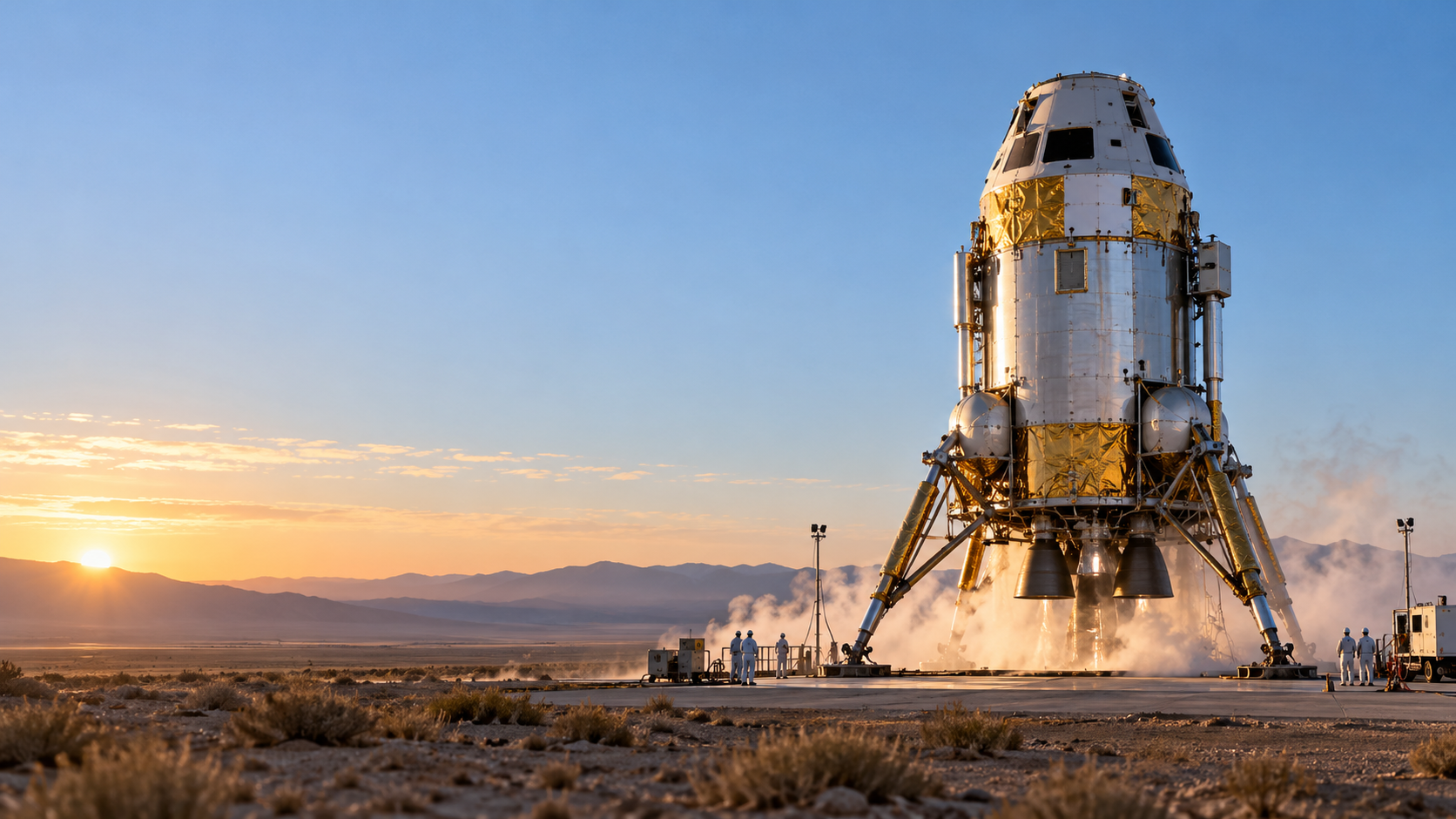
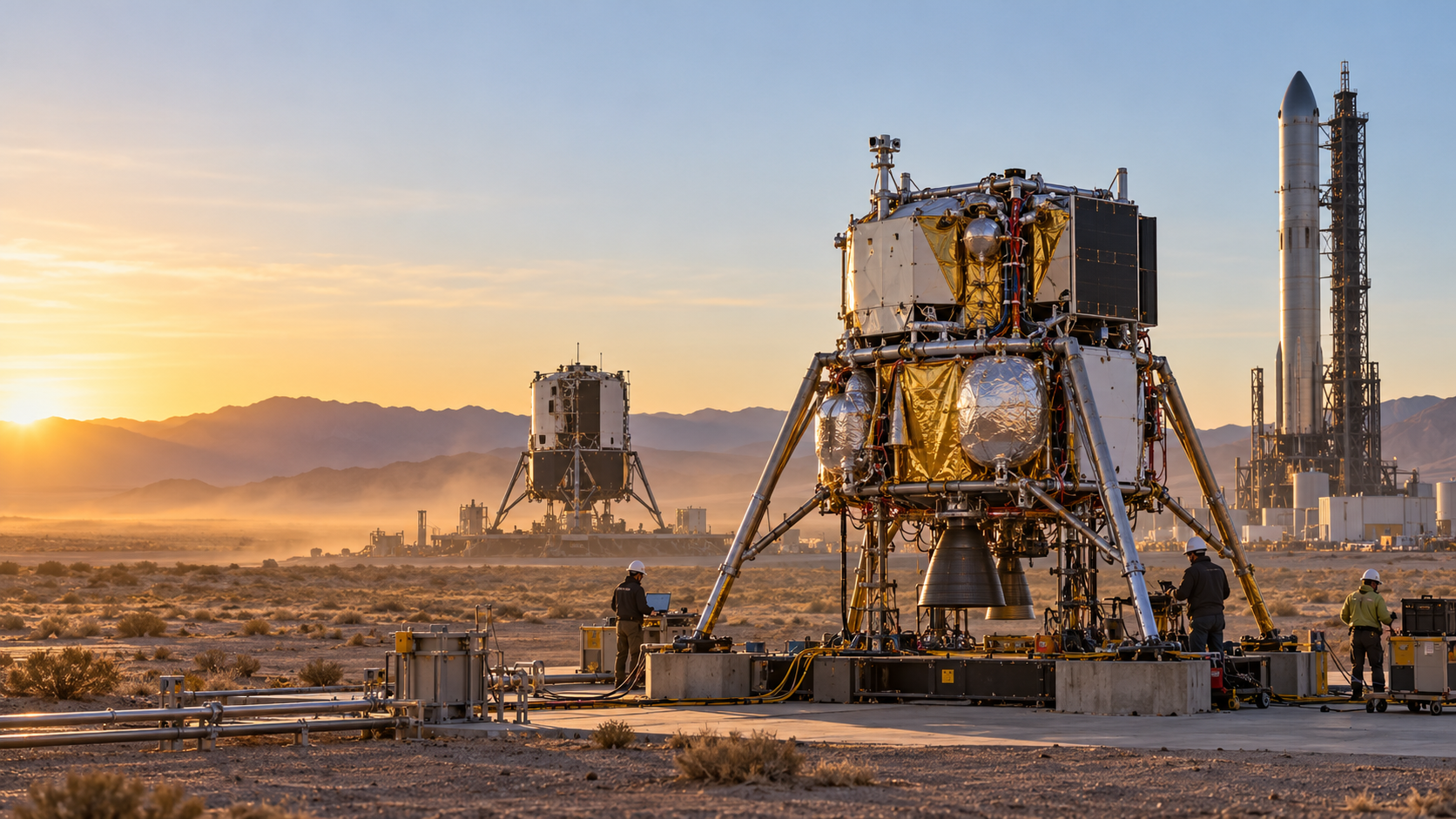
Japan’s Phobos Mission: What a Sample Could Reveal
Japan’s Phobos Mission: What a Sample Could Reveal
Japan has launched an ambitious mission to investigate Phobos, the larger and closer of Mars’ two moons, and return material to Earth for laboratory analysis. A returned sample could help scientists determine whether Phobos formed alongside Mars, emerged from a massive impact, or began as an asteroid captured by the planet’s gravity.
The available reports confirm the mission’s broad sample-return objective but do not verify every operational detail, including the spacecraft’s name, launch vehicle, sampling mechanism, mission duration, sample mass, or Earth-return date.
What the Mission Will Study
The mission’s central goal is to investigate Phobos, examine its surface and surroundings, collect material, and return it to Earth. Remote observations can reveal a moon’s shape, color, mineral signatures, gravity field, and geological features. Sample return adds another level of scientific capability by allowing researchers to conduct repeated, high-precision tests in laboratories.
Scientists could divide the sample among research teams, preserve portions for future studies, and use instruments too large, delicate, or power-intensive to operate on a spacecraft. The sample would therefore serve as a long-term scientific resource rather than a one-time measurement.
Why Phobos Matters
Phobos is Mars’ larger inner moon. Its proximity to Mars makes it valuable for studying the history of the Martian system, but its surface may contain material from several sources. Native Phobos material could be mixed with Martian ejecta, asteroid fragments, impact debris, dust, and particles altered by radiation and micrometeorite bombardment.
This mixture makes the sample scientifically important but difficult to interpret. Researchers will need to compare laboratory results with orbital measurements, images, geological models, and observations of Mars and Deimos.
A Phobos sample could reveal:
- Mineral composition and crystal structure.
- Chemical elements and their abundances.
- Isotopic signatures linked to material origins.
- Evidence of hydrated minerals.
- Carbon-bearing compounds.
- Effects of radiation and micrometeorite impacts.
- Similarities and differences between Phobos, Mars, and asteroids.
The mission does not require the sample to contain life to be scientifically valuable. Composition, history, and origin alone could reshape models of how Mars and its moons formed.
Competing Theories About the Moons’ Origins
The origin of Phobos and Deimos remains unresolved. Their irregular shapes and dark surfaces resemble some asteroids, but their relationship with Mars supports other explanations.
Asteroid Capture
Phobos and Deimos may have formed elsewhere in the Solar System before being captured by Mars. If Phobos resembles primitive asteroids in its minerals, chemical proportions, and isotopes, the capture hypothesis would gain support.
However, composition alone cannot establish capture. A complete explanation must also account for the moons’ present orbits and the physical effects of gravitational capture.
Giant Impact
Another possibility is that a major collision involving Mars created debris that later assembled into moons. If so, Phobos could contain a chemical or isotopic connection to Mars.
Comparisons with Martian meteorites and other Martian measurements would be important. A strong match could support a shared origin, although impacts can mix material from Mars, the impacting body, and earlier objects.
Mixed Origins
Phobos may contain material from multiple sources. Its original body could have been asteroid-like, while later impacts deposited Martian debris on the surface. Alternatively, a collision involving Mars could have incorporated material from an external object.
A single sample cannot answer every question. Scientists must determine whether the collected material represents Phobos itself, Mars-derived ejecta, impactor material, or a combination.
Phobos and Deimos
Phobos is Mars’ larger, inner moon. It has an irregular, heavily cratered surface and orbits close to the planet. Its orbit makes it useful for studying tidal evolution, orbital dynamics, and the relationship between a planet and a small satellite.
Deimos is smaller and farther from Mars. Comparing the two moons could help determine whether they formed together, arrived separately, or experienced different evolutionary histories. The supplied reports identify Phobos as the sample target and do not confirm a dedicated Deimos sampling operation.
Phobos’ Possible Future Ring
Mars’ gravity affects Phobos’ orbit over geological timescales. Tidal forces are expected to move the moon gradually closer to Mars. In the distant future, increasing tidal stress could fracture and disrupt Phobos, allowing its fragments to spread into a debris ring.
This process would occur over an immense period and would not be caused or accelerated by Japan’s mission. Studying Phobos now could nevertheless improve scientists’ understanding of how small moons respond to tidal stress.
A sample cannot fully reveal Phobos’ internal structure, but it could provide clues about its composition and surface strength. These results may help researchers evaluate whether the moon is a loosely assembled rubble-like body, a relatively coherent object, a mixture of materials, or a body covered by impact-generated debris.
How a Phobos Sample-Return Mission Works
A sample-return expedition generally includes these stages:
- The spacecraft launches from Earth.
- It travels through interplanetary space.
- It enters the Martian system.
- It navigates near Phobos.
- It studies and approaches the moon.
- It collects and secures surface material.
- It begins the return journey.
- A recovery team receives the sealed sample on Earth.
Navigation near Phobos is difficult because the moon has low gravity, an irregular shape, uneven terrain, and potentially loose surface material. Mars’ much stronger gravity also influences the spacecraft’s trajectory.
The spacecraft must identify a site that is both scientifically valuable and safe. It must approach or contact the surface precisely, collect material, verify that the sample is secured, and protect it from contamination during the return journey.
The supplied reports do not confirm the sampling method, location, quantity of material, return date, or recovery location. Those details require confirmation from official mission documentation.
Why Earth-Based Analysis Matters
Earth laboratories can provide capabilities that are difficult to place on a spacecraft. Researchers can use microscopy to inspect grains, spectroscopy to identify minerals, isotope analysis to trace origins, and organic chemistry techniques to study carbon-bearing compounds.
Multiple laboratories can analyze separate portions of the sample. Results can be repeated, compared, and reassessed with improved instruments. Samples can also be preserved for future scientists and technologies.
Researchers could compare Phobos material with Martian meteorites, asteroid samples, and terrestrial analogues. Isotopic fingerprints may be especially useful because different regions of the Solar System can preserve distinctive chemical signatures. No single measurement will necessarily settle the origin debate; scientists will evaluate mineralogy, chemistry, isotopes, surface alteration, and orbital history together.
Importance for Mars Exploration
Mars should be studied as a system that includes the planet, its moons, impact history, surface materials, and atmospheric evolution. Phobos may preserve evidence that is difficult to obtain directly from Mars. Material ejected from Mars by impacts could have reached Phobos, while native Phobos material could preserve information about the early Solar System and the formation of small bodies.
Knowledge of Phobos’ composition and surface conditions could support future robotic missions by helping engineers select landing sites, design sampling hardware, plan close approaches, and assess dust or loose-debris hazards. The supplied reports do not establish that Japan’s mission is intended to create a human base or support crewed settlement.
The mission would also demonstrate deep-space navigation, small-body operations, precision sampling, sample containment, and interplanetary return. Its techniques could influence future missions to asteroids, comets, and planetary moons.
What Remains Unknown
The available summaries confirm the broad objective but leave several operational details unverified:
- Spacecraft name.
- Launch date.
- Launch vehicle.
- Mission operators.
- Mission duration.
- Sampling mechanism.
- Sample mass.
- Exact sampling site.
- Earth-return date.
- Recovery location.
Readers should distinguish confirmed mission goals from scientific possibilities. Reports identify Phobos sample return as the central purpose, but detailed engineering and scheduling information requires confirmation from official sources.
What Success Would Mean
Scientific Success
A successful sample collection would provide direct laboratory material from Phobos. Analysis could narrow the debate over the moon’s origin and improve models of Mars’ formation, impact history, and early development.
Engineering Success
Reaching Phobos and operating safely near its weak gravity and irregular terrain would demonstrate advanced deep-space navigation. Collecting, securing, and returning material would represent a major achievement in small-body exploration.
Long-Term Success
The mission could establish a foundation for future exploration of Mars’ moons. Its data could improve planning for robotic missions, sample-return projects, and possible future human-spaceflight concepts.
Conclusion
Japan’s reported Phobos mission places the Martian moon at the center of a major investigation into Mars and the early Solar System. A returned sample could reveal whether Phobos is an asteroid-like object, debris linked to Mars, or a mixture of materials from several sources.
The mission could also improve understanding of how small moons evolve under planetary gravity. Over distant geological timescales, tidal forces may disrupt Phobos and produce a debris ring. That possibility makes the moon’s structure and composition especially important to study.
Phobos is more than a small satellite orbiting Mars. It may preserve evidence about planetary formation, asteroid history, impact processes, and the evolution of the Martian system.
Frequently Asked Questions
What is Japan’s mission to study Mars’ moon?
It is a spacecraft mission designed to investigate Mars’ moons, with the reported goal of collecting material from Phobos and returning it to Earth for scientific analysis.
Which Martian moon will Japan’s spacecraft sample?
The available reports identify Phobos as the sampling target. They do not confirm the exact sampling site or collection mechanism.
Why is Phobos important to scientists?
Phobos may preserve clues about the origin of Mars’ moons, the formation of the Martian system, and the relationship between Mars, asteroids, and impact debris.
Could Phobos become a ring around Mars?
Mars’ tidal forces are expected to affect Phobos over extremely long timescales. The moon could eventually break apart and form a debris ring, but this is a distant natural process rather than an immediate event.
What can scientists learn from a Phobos sample?
Researchers could study its minerals, chemical composition, isotopes, hydrated materials, carbon-bearing compounds, and possible evidence of material originating from Mars or an asteroid-like body.
When will the sample return to Earth?
The supplied reports confirm the sample-return objective but do not provide a verified return date. A timeline should not be stated until an official mission source confirms it.