NASA’s ESCAPADE Probes Complete Double Earth Flyby
NASA’s ESCAPADE Probes Complete Double Earth Flyby
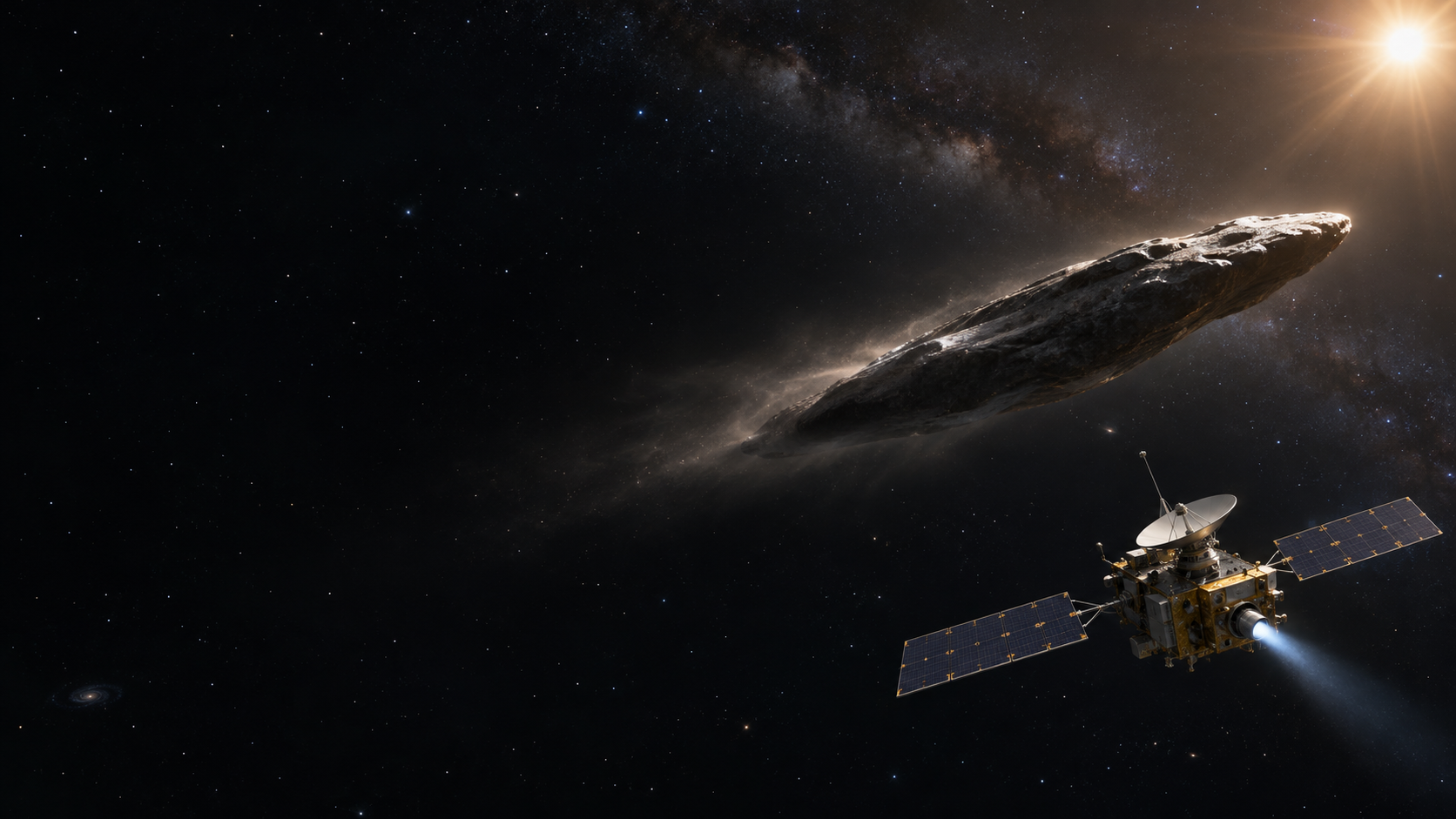
NASA’s twin ESCAPADE Mars probes have completed a coordinated Earth gravity-assist maneuver designed to adjust their paths toward Mars. The operation used Earth’s gravity and orbital motion to reshape the spacecraft’s trajectories without relying entirely on onboard propulsion.
Space described the event as an unprecedented double gravity assist involving NASA’s two ESCAPADE spacecraft. Its significance lies in coordinating the trajectory design and navigation of two independent Mars-bound probes. It does not necessarily mean that both spacecraft passed the same point at the same time.
The Earth flyby is one stage in a longer interplanetary journey. The probes must continue cruise operations, trajectory monitoring, spacecraft-health checks, and further navigation before their Mars mission can begin in full.
What Is NASA’s ESCAPADE Mission?
ESCAPADE is a NASA mission involving two spacecraft traveling toward Mars. A twin-probe design can support coordinated observations, comparisons between spacecraft, and greater resilience if one vehicle experiences an operational problem.
Two spacecraft may observe conditions from different locations or at different times. Scientists can then compare measurements and distinguish local changes from broader patterns. The specific value of this approach depends on the mission’s confirmed instruments, orbits, and observation plan.
Operating two spacecraft also increases complexity. Engineers must track each probe independently, maintain separate communications links, monitor different system states, and calculate individual trajectory corrections. Shared mission objectives do not mean the spacecraft have identical flight paths or operational needs.
Why Mars Missions Use Complex Trajectories
An interplanetary spacecraft usually does not travel in a straight line from Earth to Mars. Both planets move around the Sun, so mission planners must calculate a route that accounts for their changing positions.
Trajectory design balances several factors:
- The positions of Earth and Mars.
- The energy required for the transfer.
- Available spacecraft propellant.
- The desired arrival velocity and direction.
- Communication and tracking requirements.
- Operational and scientific goals.
A longer or more complex trajectory can reduce fuel consumption, improve arrival geometry, or provide greater flexibility for later operations. The ESCAPADE Earth flyby was intended to adjust the probes’ paths for the journey to Mars. The available report does not quantify the trajectory change, fuel savings, or exact post-flyby orbit.
How an Earth Gravity Assist Works
A gravity assist is a controlled planetary flyby that changes a spacecraft’s trajectory by using the planet’s gravity and motion. As a spacecraft approaches Earth, Earth’s gravity accelerates it toward the planet and bends its path. The spacecraft then departs along a new trajectory.
The result depends on the spacecraft’s approach direction, velocity, and Earth’s movement around the Sun. A small exchange of orbital energy occurs between the spacecraft and the moving planet. Earth’s change is negligible on a practical mission scale, while the spacecraft can experience a meaningful change in its solar orbit.
Depending on the geometry, a flyby can increase or decrease the spacecraft’s heliocentric energy. It can also redirect the spacecraft without producing a major change in speed. For a Mars-bound mission, trajectory shaping may be more important than a simple speed increase.
Gravity Assist Versus a Powered Maneuver
A powered trajectory correction changes velocity by consuming propellant. A gravity assist instead uses orbital mechanics, although the spacecraft still requires precise navigation and may need engine burns before or after the flyby.
Gravity assists can:
- Reduce dependence on large propulsion burns.
- Alter a spacecraft’s direction.
- Change its solar orbit.
- Preserve fuel for later mission phases.
- Create useful arrival conditions.
The technique has limits. Small navigation errors can produce larger trajectory differences later, so mission teams must calculate and monitor the maneuver carefully.
What Made the ESCAPADE Maneuver Unusual?
Space described the operation as an unprecedented double gravity assist. The phrase refers to the coordinated Earth-assisted trajectory strategy used by NASA’s two Mars-bound probes.
The description should not be interpreted as proof that both spacecraft flew through the same location simultaneously. Each probe has its own trajectory, navigation state, and flight requirements. The unusual feature is the coordination of two spacecraft within one Mars mission during the Earth-flyby phase.
A double operation adds operational demands. Teams must track both probes, evaluate their separate navigation data, schedule communications, monitor spacecraft health and power, assess propulsion systems, and compare predicted and actual flyby results.
The maneuver also demonstrates flexible mission design. Interplanetary flight paths are refined as new tracking data becomes available. Mission teams combine planetary gravity, spacecraft propulsion, and continuous navigation rather than treating the route as fixed after launch.
Why Use an Earth Gravity Assist?
The clearest confirmed purpose was to adjust the probes’ trajectories for their journey to Mars. Reaching Mars requires more than aiming toward the planet. The spacecraft must arrive at the correct time and from a useful direction, with approach geometry that supports later navigation, communications, and science operations.
A gravity assist can preserve propellant that might otherwise be spent on a large powered maneuver. Remaining fuel may support cruise-phase corrections, Mars approach operations, instrument commissioning, contingency responses, or extended operations. The available report does not state how much propellant ESCAPADE saved.
An Earth flyby can also help establish the arrival velocity, approach angle, and solar trajectory required by the mission. It does not complete the Mars approach by itself. The probes will still require navigation updates and potentially additional correction maneuvers.
The Engineering Behind the Flyby
A small error before a planetary flyby can become a significant difference after departure. Mission teams use tracking measurements, trajectory models, and updated calculations to refine the flight path.
Each ESCAPADE probe must be monitored as an independent vehicle. Engineers track:
- Position and velocity.
- Orientation.
- Power status.
- Communications performance.
- Propulsion performance.
- Spacecraft-system health.
The team compares the actual flight path with predictions and determines whether follow-up corrections are needed. The two spacecraft may share mission objectives, but their operational responses can differ.
The gravity assist is a major milestone, not the end of trajectory planning. Expected cruise activities include:
- Confirming the post-flyby trajectory.
- Monitoring spacecraft health.
- Conducting communications sessions.
- Performing required correction maneuvers.
- Preparing spacecraft systems and instruments for Mars operations.
What Happens Next?
The ESCAPADE probes will continue through interplanetary cruise while mission controllers maintain contact, update navigation models, and assess system performance. Cruise operations generally include health checks, communications, trajectory analysis, and system or instrument checkouts, depending on the confirmed mission schedule.
Mars approach will require another critical sequence. Potential activities include approach navigation, trajectory corrections, orbit insertion, and orbit adjustment. The exact sequence depends on the final mission architecture. The available source summary does not confirm whether the probes will enter Mars orbit or follow another operational plan.
Science operations will begin only after readiness checks, calibration, and checkout. ESCAPADE’s twin-spacecraft structure could support comparative observations, but its specific research goals and instrument capabilities require confirmation through NASA documentation.
Reporting Boundaries
The central report for this article is Space coverage summarized in Source 1. It supports the claim that NASA’s twin ESCAPADE probes completed an unusual double gravity-assist maneuver around Earth and that the operation adjusted their trajectories toward Mars.
The following details require primary-source verification:
- The exact flyby date and time.
- The closest-approach distance.
- Whether the probes flew by Earth during one event or a coordinated sequence.
- The launch vehicle and launch date.
- The individual spacecraft names.
- The expected Mars arrival date.
- The planned Mars orbit or final mission architecture.
- Propellant savings.
- Measured trajectory changes.
- Scientific instruments and detailed research objectives.
Conclusion
NASA’s twin ESCAPADE Mars probes have used an unusual double Earth gravity assist to adjust their trajectories for the journey to Mars. The operation combined orbital mechanics, precision navigation, and coordinated management of two independent spacecraft.
A gravity assist does not eliminate the need for propulsion or continued navigation. It changes a spacecraft’s path by using a planet’s gravity and motion, potentially preserving fuel and creating more suitable conditions for the next mission phase.
The next milestones involve tracking the probes during cruise, confirming their post-flyby trajectories, monitoring spacecraft health, and preparing for Mars operations. Exact dates, distances, arrival plans, and scientific objectives should be confirmed through NASA or other primary mission sources.
Frequently Asked Questions
What is NASA’s ESCAPADE mission?
ESCAPADE is a NASA mission sending two probes toward Mars. The twin-spacecraft design supports coordinated operations and creates opportunities to compare observations. Specific instruments and science objectives should be confirmed through NASA’s official mission documentation.
What is a gravity assist?
A gravity assist is a planetary flyby that changes a spacecraft’s trajectory by using the planet’s gravity and motion. It can redirect the spacecraft or alter its solar orbit while requiring less onboard propellant than an equivalent fully powered maneuver.
Why did the ESCAPADE probes fly around Earth?
The Earth flyby adjusted the probes’ trajectories for their journey to Mars. It may also help preserve propellant and establish useful arrival conditions, but the exact performance benefits require mission-specific confirmation.
Why is the maneuver called a double gravity assist?
The term refers to the coordinated use of an Earth gravity-assist strategy by NASA’s two ESCAPADE probes. It does not necessarily mean that both spacecraft passed through the same point simultaneously.
Does a gravity assist send a spacecraft directly to Mars?
No. A gravity assist changes a spacecraft’s trajectory and orbital energy. The probes still require continued navigation, monitoring, and potentially additional course corrections before reaching Mars.
What happens next for the ESCAPADE probes?
Mission teams will verify the post-flyby trajectories, monitor spacecraft health, and continue navigation during the cruise toward Mars. Later milestones may include approach operations, orbit insertion, orbit adjustment, instrument checkout, and science observations, depending on the confirmed mission plan.