Nasdaq Futures Slip as Data-Center IPO Weighs on Tech
Nasdaq Futures Slip as Data-Center IPO Weighs on Tech Investors
Nasdaq futures are lower before the opening bell as investors assess a disappointing data-center IPO. The move places growth-stock valuations, artificial intelligence spending and demand for new technology offerings under closer scrutiny.
Nasdaq futures provide an early indication of investor positioning before regular trading begins, but they do not guarantee where the Nasdaq Composite or Nasdaq-100 will finish. Overnight trading is often less liquid, and futures can reverse after economic data, corporate announcements or changes in Treasury yields.
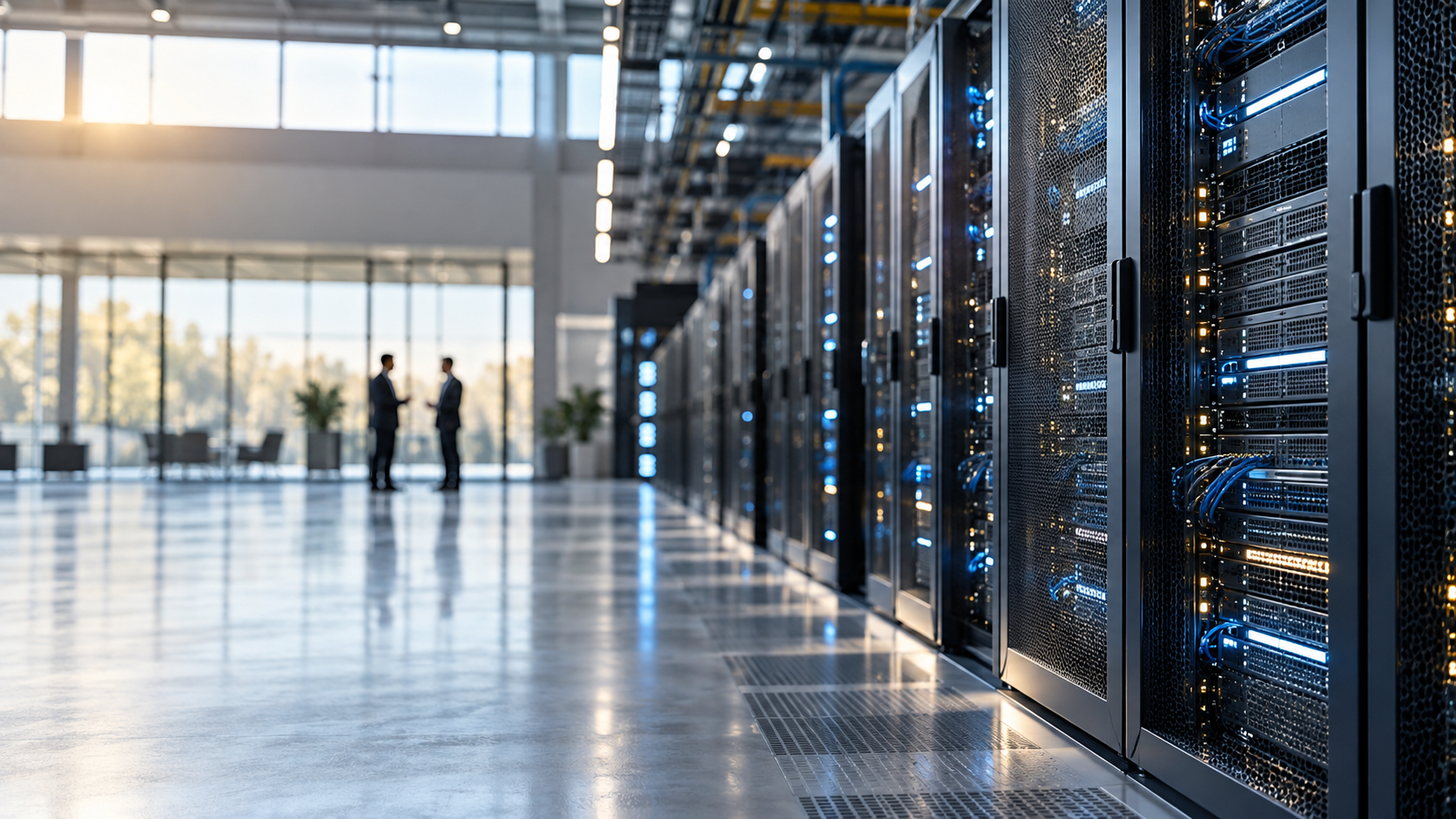
The weak data-center listing adds to market caution. Data-center companies sit at the intersection of artificial intelligence, cloud computing, semiconductors, networking and energy infrastructure. Their growth prospects are significant, but the business requires substantial capital spending, reliable power and sustained customer demand.
Investors are weighing four questions:
- Is the Nasdaq weakness temporary or part of a broader risk-off move?
- Does the IPO signal weaker demand for technology listings?
- Are data-center valuations ahead of near-term earnings potential?
- Can artificial intelligence and cloud spending generate adequate returns on invested capital?
The answers will depend on market breadth, interest-rate expectations, large-cap technology performance and follow-through across other recent IPOs.
Nasdaq Futures: What the Decline Signals
How Nasdaq futures work
Nasdaq futures are contracts that provide exposure to the future value of a Nasdaq-linked index. They trade outside regular market hours and respond to overnight developments in company shares, interest rates, economic releases and global markets.
Investors commonly monitor Nasdaq-100 futures because the index has significant exposure to large technology and growth companies. Futures can move after earnings reports, economic data, Federal Reserve commentary, Treasury yield changes, geopolitical developments, currency movements, major technology-stock moves and changes in artificial intelligence spending expectations.
Futures are sentiment indicators, not direct forecasts. The cash market can open higher or lower than futures suggest, and direction can change during the session. Trading volume, market breadth and sector leadership provide a fuller picture after the opening bell.
Why technology stocks may be under pressure
Technology shares are often sensitive to interest rates because investors value many companies on earnings expected several years in the future. When bond yields rise, those future cash flows become less valuable in present-value terms. Higher yields can also make bonds and other defensive assets more attractive than expensive growth stocks.
A weak IPO can intensify that pressure. Limited demand for a newly listed technology company may prompt investors to question whether sector valuations have become too aggressive. Investors may also prefer established companies with strong cash flow over newer businesses that require additional financing.
Other possible causes of weaker Nasdaq futures include:
- Higher rate expectations
- Disappointing corporate guidance
- Profit-taking after a strong rally
- Concerns about economic growth
- Weakness in semiconductor shares
- Renewed geopolitical risk
- Rotation toward value or defensive sectors
The day-specific catalyst should be confirmed through current exchange data, company filings and reputable financial reporting. A lower futures reading alone does not establish why the market is declining.
What to watch at the open
Investors should compare the opening performance with the overnight futures move. Key indicators include:
- Nasdaq Composite
- Nasdaq-100
- S&P 500 technology sector
- Semiconductor stocks
- Cloud and software companies
- Treasury yields
- Cboe Volatility Index
- Advancing and declining shares
- Trading volume
Market breadth is especially important. A decline caused by a few large technology companies differs from broad selling across semiconductors, software, hardware and technology services.
A low-volume pullback may reflect cautious positioning. Heavy selling across multiple sectors may indicate a broader reduction in risk exposure.
Why a Weak Data-Center IPO Matters
What the IPO market reveals
Initial public offerings provide a real-time test of demand for new equity. Companies and underwriters use the process to assess how much investors are willing to pay for expected growth, future profitability and strategic importance.
A weak data-center IPO may reflect several concerns:
- The valuation was considered too high.
- Investors wanted clearer evidence of profitability.
- Financing costs reduced the company’s appeal.
- Demand for new technology offerings was limited.
- Customers may be delaying infrastructure commitments.
- Investors preferred established companies with stronger cash flow.
One IPO cannot represent the entire technology market. Performance depends on the offering price, debt burden, customer concentration, management team, public float, lockup terms and underwriting structure.
A stock that opens below its offer price sends a different signal from an offering priced below the expected range. A reduced price may show that demand weakened before trading began. Poor first-day performance may indicate that the final price still exceeded what public-market investors considered reasonable.
Before publication, the listing should be checked against regulatory filings and exchange records. Confirm the company name, ticker, exchange, offer price, number of shares sold, opening price, closing price, market capitalization and underwriters.
Why data-center companies attract attention
Data centers provide the physical infrastructure required for cloud services, artificial intelligence workloads, enterprise applications, digital storage and high-performance computing.
Their business models can include:
- Owning and operating data centers
- Leasing capacity to cloud providers
- Providing colocation services
- Building facilities for large customers
- Supplying power and cooling systems
- Selling networking and server infrastructure
The artificial intelligence boom has increased attention on data-center capacity. AI models require advanced processors, high-speed networking, substantial electricity and specialized cooling. Cloud providers and technology companies have therefore announced significant infrastructure investment plans.
That growth carries financial risks. Data-center operators must fund construction, secure power, manage equipment costs and maintain high utilization. Investors typically evaluate revenue growth, customer concentration, contract duration, capacity utilization, electricity availability, construction costs, debt, interest expense, free cash flow and return on invested capital.
A company can report rapid revenue growth while consuming significant cash. Investors must determine whether current capital spending will create durable earnings or require repeated external financing.
What a poor IPO debut could mean
A poor listing could indicate that investors are demanding stronger evidence before assigning premium valuations to infrastructure companies. They may want proof that AI-related demand will translate into sustained revenue, operating margins and free cash flow.
Possible interpretations include:
- Valuation concerns: The offer price may have assumed aggressive growth or margins.
- Financing pressure: Higher borrowing costs may make construction projects less attractive.
- Demand uncertainty: Investors may question whether customers will maintain planned infrastructure spending.
- Profitability concerns: High capital expenditure may delay earnings and cash generation.
- Transaction-specific issues: Debt, limited public float or customer concentration may have reduced demand.
Weak first-day performance does not automatically mean the data-center industry is deteriorating. The stock may recover if the company reports strong bookings, improves margins or secures long-term contracts. Continued weakness across comparable companies would provide stronger evidence of a broader concern.
Tech Investors Reassess the AI and Infrastructure Trade
AI enthusiasm meets financial discipline
Artificial intelligence has supported demand for data centers, processors, networking equipment and cloud capacity. Investors initially focused on the size of the opportunity. They are increasingly asking whether that opportunity will generate acceptable returns.
Important questions include:
- Are customers converting AI demand into actual contracts?
- How quickly will infrastructure spending become revenue?
- Can providers maintain pricing power?
- Are operating margins improving?
- How much capital expenditure is required?
- What is the expected return on new facilities?
- Are customers concentrated among a small number of large companies?
The distinction between demand and profitable demand matters. A company may have strong bookings but weak cash flow if construction and equipment costs rise faster than revenue.
Technology investors may therefore favor companies with visible contracts, diversified customers, strong balance sheets and internally funded expansion. Businesses that depend heavily on debt or new equity may face greater volatility when IPO demand weakens.
Effects on semiconductor and hardware stocks
A data-center slowdown could affect several technology subsectors, although the impact would vary by company. Potentially sensitive groups include chip designers, semiconductor manufacturers, memory suppliers, networking equipment companies, server manufacturers, cooling providers, power-management companies and data-storage businesses.
Companies with heavy exposure to AI infrastructure may experience larger price swings if investors revise spending expectations. Suppliers with diversified exposure to automotive, communications, consumer electronics and industrial customers may be more resilient.
Investors should compare order visibility, backlog quality, inventory levels and customer concentration. A company reporting firm orders and strong delivery schedules may trade differently from a speculative business whose valuation depends largely on future demand.
Effects on cloud, software and platform companies
Data-center spending affects cloud and software companies indirectly. More infrastructure can increase computing capacity, but it can also raise depreciation, electricity and operating costs.
Investors may ask whether infrastructure spending will produce higher cloud revenue, whether customers can absorb rising computing costs, whether cloud providers are maintaining capital-expenditure plans, whether AI services will improve margins and whether software companies can monetize AI features.
Infrastructure investment and software monetization are related but not identical. A data-center operator may benefit from higher capacity demand while a software company struggles to convert AI interest into recurring revenue.
Market Drivers Beyond the IPO
Interest rates and Treasury yields
Treasury yields remain central to the valuation of long-duration technology stocks. Higher yields can pressure growth shares, particularly when investors believe future earnings are far from being realized.
Market participants should monitor two-year and ten-year Treasury yields, inflation expectations, Federal Reserve policy expectations, real yields and credit spreads.
The market reaction to economic data depends on its effect on interest rates. Strong data can support stocks if it improves earnings expectations, but it can pressure technology shares if it raises expectations for higher rates.
Economic data
Reports that could influence the session include employment data, inflation readings, retail sales, consumer spending, manufacturing activity, consumer confidence and housing data.
A weaker report may increase expectations for monetary easing, supporting growth stocks. It may also raise concerns about corporate earnings. Strong data can support cyclical companies while weighing on rate-sensitive technology shares if bond yields rise.
Earnings and corporate guidance
Technology earnings reports provide a stronger foundation than futures alone. Investors should examine revenue growth, gross margins, operating margins, capital expenditure, AI-related spending, cloud demand, backlog, free cash flow and forward guidance.
Large technology companies have significant influence over the Nasdaq. Their spending plans can affect semiconductor manufacturers, networking companies, data-center operators and power suppliers.
Broader risk sentiment
The Nasdaq move should also be compared with European and Asian markets, currency movements, oil and other commodity prices, credit-market conditions, geopolitical developments, trading volume and defensive-sector performance.
If technology shares fall while financials, industrials and consumer sectors remain stable, the issue may be concentrated in growth stocks. If most sectors decline, the market may be responding to broader risk reduction.
How Investors May Interpret the Weak Listing
Bearish interpretation
The bearish view is that the IPO reflects stretched valuations, deteriorating financing conditions or weaker demand for speculative growth companies. Under this interpretation, infrastructure spending may take longer to produce acceptable returns, while public-market investors may favor profitable businesses.
That conclusion requires broader evidence. Investors should examine other recent technology IPOs, secondary offerings, credit spreads and capital-expenditure plans from major cloud providers.
More limited interpretation
The listing may have failed for company-specific reasons, including an aggressive offer price, high debt, concentrated customers, limited public float, management concerns, lockup restrictions, weak underwriting demand or unclear profitability.
A single company may not represent the broader data-center industry. Sector conclusions should come from multiple comparable companies and market indicators.
What would confirm a broader trend
Evidence of a wider shift would include multiple technology IPOs trading below offer prices, repeated IPO price cuts, offering withdrawals, wider credit spreads, lower data-center construction activity, reduced cloud capital-expenditure plans, downward analyst revisions and weakness across infrastructure suppliers.
Stocks and Sectors to Monitor
Monitor large-cap technology companies, semiconductor stocks, data-center and infrastructure companies, and recently public technology businesses.
Large-cap technology companies can determine the Nasdaq’s direction because of their index weight and influence on investor sentiment. Semiconductor and equipment companies can provide an early signal of data-center demand. Data-center operators, colocation providers, power-system companies, cooling businesses, networking companies, server manufacturers and digital infrastructure real estate companies offer different levels of exposure and financial risk.
For newly public technology companies, track first-day performance, post-IPO volatility, trading volume, analyst coverage and insider-selling restrictions.
What to Watch Through the Session
Market breadth and volume
Determine whether declining stocks outnumber advancing stocks and whether trading volume exceeds recent averages. High-volume selling across multiple sectors generally carries more information than a low-volume pullback.
Bond yields and valuations
Watch Treasury yields alongside the Nasdaq. Technology stocks that stabilize when yields fall may remain primarily rate-sensitive. Continued weakness despite lower yields could point to concerns about earnings, valuations or sector-specific demand.
Sector rotation
Compare technology with financials, health care, energy, consumer staples, utilities and industrials. A move into defensive sectors suggests risk reduction. Broad weakness across all sectors indicates a less selective market decline.
IPO and growth-stock performance
Review other new listings and speculative technology shares. Strong demand for profitable companies alongside weakness in unprofitable growth stocks would indicate a more selective market rather than a complete withdrawal from technology.
Risks and Limitations
Nasdaq futures can change before the opening bell. Overnight markets are less liquid, and economic releases, company announcements or bond-market moves can quickly reverse the initial direction.
A single IPO also does not define the market. Its performance depends on company-specific conditions and transaction structure. Broader conclusions require evidence from comparable listings, sector earnings, credit markets and operating data.
This article provides market context, not personalized investment advice. Investors should consider risk tolerance, investment horizon, diversification and liquidity needs before making decisions. Professional advice may be appropriate for individual circumstances.
Conclusion
Nasdaq futures are weaker as investors assess technology valuations and a disappointing data-center IPO. The listing adds pressure to a market already sensitive to interest rates, capital expenditure and expectations for artificial intelligence growth.
The central issue is whether the IPO reflects a broader shift in how investors value infrastructure companies. Market participants want clearer evidence that AI and cloud spending will produce durable revenue, stronger margins and attractive returns on invested capital.
Through the session, investors should monitor Treasury yields, Nasdaq breadth, semiconductor performance, large-cap technology stocks, trading volume and other recent IPOs. Verified market data matters more than conclusions drawn from one premarket move or one newly public company.
Frequently Asked Questions
Why are Nasdaq futures lower today?
Nasdaq futures can decline because of weaker technology sentiment, higher interest-rate expectations, disappointing corporate news, poor IPO performance or broader risk reduction. The confirmed day-specific catalyst should be checked against current market reports.
What does a weak data-center IPO say about technology stocks?
It may indicate concerns about valuation, profitability, financing needs or investor risk appetite. One weak listing does not prove that the entire technology sector is weakening.
Why do interest rates affect Nasdaq stocks?
Many technology companies are valued partly on expected future growth. Higher rates can reduce the present value of future earnings and make safer assets more attractive.
Should investors sell technology stocks when Nasdaq futures fall?
Futures alone do not provide enough information for an investment decision. Investors should evaluate company fundamentals, portfolio allocation, time horizon, diversification and risk tolerance.
Which sectors could be affected by data-center weakness?
Potentially affected sectors include semiconductors, servers, networking, cloud infrastructure, power systems, cooling equipment and technology real estate. Exposure and financial strength differ substantially among companies.
What should investors watch after the market opens?
Monitor Nasdaq breadth, trading volume, Treasury yields, semiconductor performance, large-cap technology stocks, other recent IPOs, company-specific news and changes in analyst expectations.