New iPad Mini OLED: 60Hz, Acoustic Display, and More
New iPad Mini OLED: 60Hz, Acoustic Display, and More
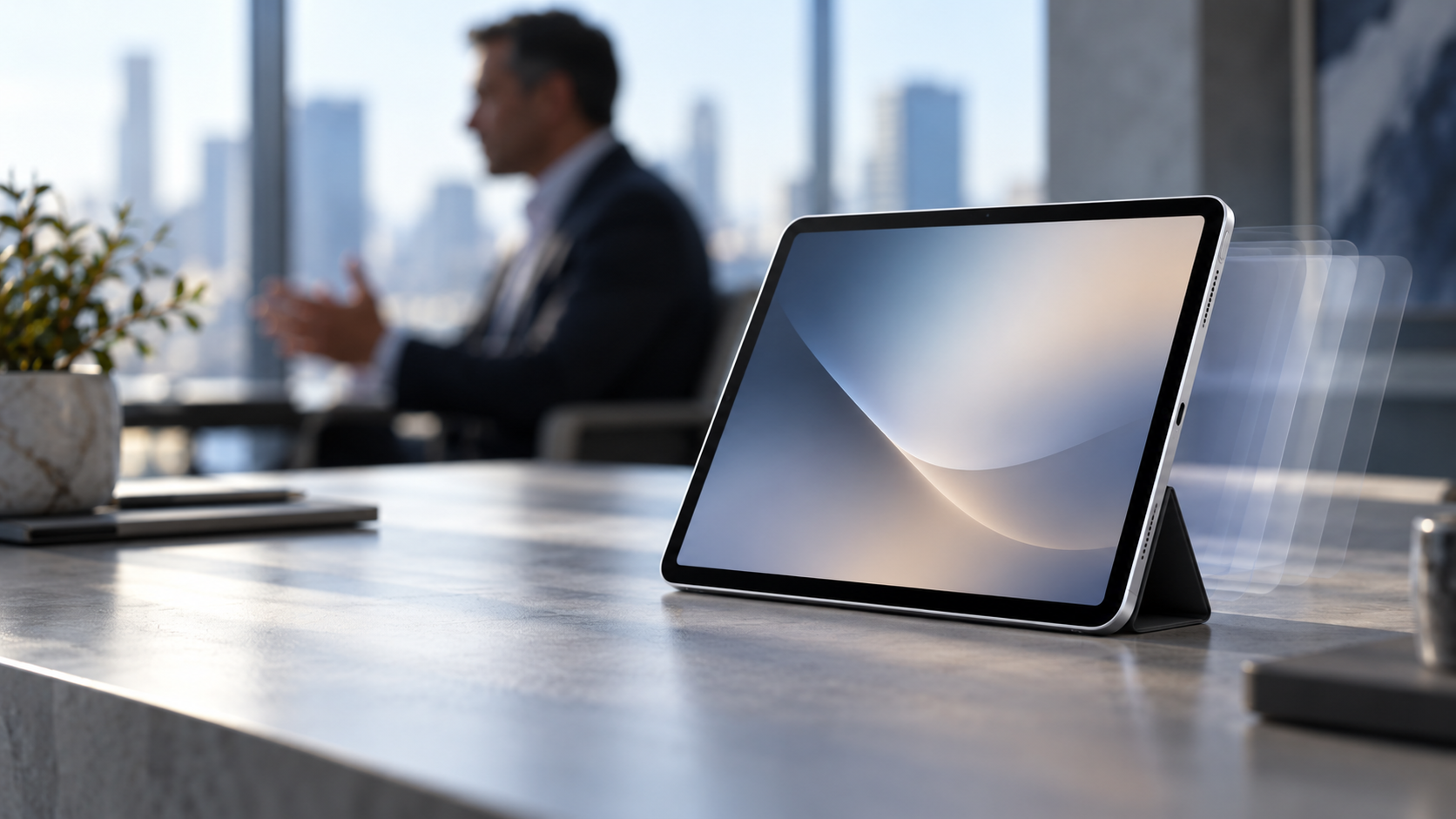
Apple’s smallest tablet could receive its most significant redesign yet. Reports describe a new iPad mini with an OLED display, Acoustic Display technology, a 60Hz refresh rate, an A20 Pro chip, water resistance, and a reported starting price of $699.
The main trade-off is clear: the new iPad mini could deliver deeper blacks and stronger contrast without adopting ProMotion. Image quality may improve while motion remains at the standard 60Hz refresh rate instead of the smoother 120Hz experience available on higher-end iPad Pro models.
An Apple vice president reportedly discussed the OLED panel, Acoustic Display technology, and 60Hz refresh rate. A separate SFG Media report described the A20 Pro chip, water resistance, and $699 price. These details remain third-party reports unless Apple confirms them in official product documentation. Source 1 Source 5
OLED Display and Acoustic Display
OLED pixels produce their own light. Unlike an LCD panel, an OLED display does not need a separate backlight. Individual pixels can switch off completely when displaying black, creating deeper blacks and stronger perceived contrast.
The upgrade could improve movie playback, photo viewing, gaming, and reading in dim environments. Because the iPad mini is typically held close to the viewer, improvements in contrast and image depth may be noticeable without increasing the tablet’s physical size.
Acoustic Display represents a separate design change. The technology reportedly integrates sound production more closely with the display area. On a compact tablet, this could help Apple use internal space more efficiently or create a cleaner front design.
The available reports do not confirm brightness, HDR performance, response time, color accuracy, speaker configuration, or audio output. Those specifications require confirmation from Apple or independent testing.
OLED Without ProMotion: The Main Compromise
The new iPad mini reportedly uses a 60Hz refresh rate. A 60Hz display refreshes the image 60 times per second, which is adequate for ordinary app use, video playback, browsing, reading, and document work.
It does not provide the same motion smoothness as a 120Hz ProMotion display. The difference may be noticeable when scrolling quickly, navigating menus, drawing with an Apple Pencil, or playing games with rapid camera movement.
The 60Hz specification is not automatically a defect. It may reflect product positioning, cost targets, battery considerations, or engineering decisions related to the compact chassis. However, the available sources confirm the refresh rate without explaining Apple’s full rationale.
The trade-off can be summarized as follows:
- OLED can improve contrast, black levels, and overall image quality.
- ProMotion would improve motion smoothness and input responsiveness.
- The reported configuration includes OLED but not ProMotion.
For readers, email users, and people watching standard video, 60Hz may be acceptable. Users accustomed to a 120Hz iPad Pro or premium smartphone may find the limitation more obvious.
What OLED Could Change for Users
OLED may benefit reading, streaming, gaming, and photo viewing. Dark scenes could appear more cinematic, while bright highlights may stand out against darker backgrounds. Strong contrast can also make text appear clearer, particularly in dark mode or low-light conditions.
OLED does not guarantee higher brightness, a faster refresh rate, longer battery life, or improved durability. Panel quality depends on implementation, calibration, coatings, brightness management, and software.
Gaming could look more immersive because shadows and bright effects may have greater visual impact. The 60Hz limit remains important, however. Games may look better without appearing as fluid as they would on a 120Hz display.
Users who value contrast more than motion smoothness may consider OLED a major upgrade. People who spend most of the day scrolling or drawing may prefer ProMotion.
Acoustic Display: What Remains Unknown
Acoustic Display is one of the reported headline technologies for the new iPad mini. The broad concept involves producing sound through components integrated with or positioned within the display system.
On a compact tablet, integrating audio hardware more closely with the display could give Apple more flexibility when arranging speakers, microphones, cameras, and other components. It could also support a cleaner front-panel design.
The available material does not establish whether Acoustic Display replaces conventional speakers or handles media playback, voice calls, or both. It also does not confirm loudness, bass response, microphone performance, stereo separation, or spatial audio support.
Audio quality depends on speaker size, enclosure design, software processing, tuning, and placement. Acoustic Display should therefore be viewed as a reported design and audio technology rather than a proven performance advantage.
Reported Hardware Upgrades
A20 Pro Chip
SFG Media reportedly says the new iPad mini includes an A20 Pro chip. Apple’s official documentation must confirm the chip name and specifications before its performance can be assessed accurately. Source 5
If accurate, a newer Pro-class chip could improve app launches, multitasking, graphics performance, and support for future iPadOS updates. It could also provide more capacity for on-device artificial intelligence features.
The supplied reports provide no reliable CPU, GPU, Neural Engine, memory, or benchmark figures. Performance claims should remain general until Apple publishes specifications and independent testing becomes available.
Water Resistance
One report says the new iPad mini adds water resistance. This could benefit users who carry the tablet while traveling or use it in kitchens, workshops, classrooms, and other environments where spills are possible.
Water resistance is not the same as waterproofing. Protection depends on the official IP rating, test conditions, port configuration, and exclusions. Buyers should not submerge the device or rely on an unconfirmed claim.
Apple should specify the rating, covered liquids, exposure limits, and warranty restrictions.
Storage, Connectivity, and Battery Life
The supplied reports do not confirm storage tiers, Wi-Fi standards, cellular options, USB-C capabilities, battery capacity, battery-life estimates, or charging performance.
These specifications could affect the buying decision as much as the OLED panel. Storage determines whether the tablet can hold large games, downloaded video, photos, and work files. Cellular connectivity affects travel and field use. USB-C capabilities determine how users can transfer files or connect displays and storage devices.
Battery life is especially important because OLED power consumption varies with content. Dark interfaces may use less energy in some situations, while high brightness and bright content can increase demand. Official estimates and independent testing are necessary to evaluate practical endurance.
Price and Positioning
SFG Media reportedly lists the new iPad mini at a starting price of $699. The available material does not establish the region, storage configuration, or whether the figure represents an official Apple price. Source 5
The final cost may vary by storage capacity, Wi-Fi or cellular connectivity, regional taxes, AppleCare coverage, and accessories.
At $699, the tablet would occupy a premium position for a compact device. Its value would depend on whether buyers prioritize OLED image quality, portability, processing power, Acoustic Display technology, and water resistance over a higher refresh rate.
Comparison With Other iPad Models
iPad Mini Versus iPad Air
The iPad mini prioritizes portability and one-handed use. The iPad Air offers a larger workspace for split-screen multitasking, keyboard use, creative projects, and extended document work.
The new iPad mini could be better suited to reading, travel, entertainment, and quick tasks. The iPad Air remains the stronger choice for productivity and workflows that require more screen space.
iPad Mini Versus iPad Pro
The reported lack of ProMotion separates the new iPad mini from iPad Pro models. ProMotion can make scrolling, drawing, and animation feel smoother, while the mini’s OLED panel may focus on contrast and image quality.
The mini could be a smaller and potentially less expensive alternative, but it is not a direct replacement for the iPad Pro:
- iPad mini: Portability and personal use.
- iPad Pro: Display smoothness, larger-screen productivity, advanced accessories, and professional workflows.
- New iPad mini OLED: Compact design with improved contrast but a reported 60Hz limit.
An OLED panel alone does not make the mini a Pro-class tablet.
Should Existing iPad Mini Owners Upgrade?
Existing owners may consider upgrading for OLED contrast, a newer processor, reported water resistance, Acoustic Display technology, or a longer software-support horizon.
Waiting may be wiser for users satisfied with their current screen, less sensitive to 60Hz motion, or focused on confirmed battery and storage improvements. The reported $699 starting price also raises the upgrade threshold.
Owners should wait for official specifications, trade-in values, battery testing, and independent display reviews before replacing a recent iPad mini.
What the Sources Confirm
The Apple executive report discusses an OLED display, Acoustic Display technology, and a 60Hz refresh rate. A separate SFG Media report describes an OLED display, an A20 Pro chip, water resistance, and a reported $699 starting price.
WebWire characterizes the product as the iPad mini’s biggest update ever but provides no additional specifications. Source 7
The Huawei Starlight report concerns a separate smartphone and does not support claims about the iPad mini. Source 3
The delayed Siri and WWDC report also does not concern the iPad mini. Source 9
These reports should not be treated as equivalent to Apple’s official technical documentation. Before publication or purchase recommendations, verify the refresh rate, A20 Pro naming, water-resistance rating, starting price, region, display specifications, battery life, Acoustic Display implementation, storage, and connectivity options.
Verdict
The reported new iPad mini OLED could deliver Apple’s most substantial update to its smallest tablet in years. Its potential strengths include OLED contrast, a compact form factor, Acoustic Display technology, a newer processor, and water resistance.
The central weakness is the 60Hz refresh rate. The tablet may look better without feeling as fluid as an iPad Pro. Users who scroll rapidly, draw frequently, or play fast-moving games should treat the refresh-rate decision as a major buying factor.
The new iPad mini could suit readers, travelers, students, and media consumers who prioritize portability over workspace. Consider it if compact size and OLED contrast matter more than ProMotion. Wait for official specifications if battery life, storage, water resistance, or performance will determine the purchase.
The key question is whether the OLED upgrade justifies the reported $699 starting price without a higher refresh rate.
FAQ
Does the new iPad mini have an OLED display?
According to the supplied reports, the new iPad mini features an OLED display. Complete panel specifications remain unavailable. Source 1
Does the new iPad mini support ProMotion?
The supplied source says the new iPad mini uses a 60Hz refresh rate, indicating that it does not offer ProMotion’s higher refresh rate. Apple’s official specifications should confirm the final configuration.
What is Acoustic Display?
Acoustic Display is a reported technology associated with the iPad mini’s audio and display design. The available material does not explain its exact implementation, speaker configuration, or effect on sound quality.
How much does the new iPad mini cost?
One supplied report lists a $699 starting price. The final price may vary by region, storage capacity, and connectivity option.
Does the new iPad mini use an A20 Pro chip?
A supplied report claims that the tablet includes an A20 Pro chip. Apple should confirm the chip name, memory configuration, and performance specifications.
Is the new iPad mini water-resistant?
One report says the new iPad mini adds water resistance. Buyers should check for an official IP rating, test conditions, and usage limitations before relying on the claim.