NFL Week 6 Winners and Losers: Eagles, Browns and Cowboys
NFL Week 6 Winners and Losers: Eagles, Browns and Cowboys
NFL Week 6 changed more than the standings. It reshaped how several teams are viewed and increased pressure on coaches, quarterbacks, and front offices.
The Cleveland Browns strengthened their position in the AFC North and gained credibility in a competitive division. The Philadelphia Eagles suffered another listless loss, raising questions about preparation, accountability, and possible organizational changes. The New York Giants faced instability at quarterback and running back, while the Dallas Cowboys appeared to regress after a dreadful loss to the Green Bay Packers.
The week also increased pressure on several coaches. One analysis identified three coaches whose jobs appeared increasingly at risk, making the middle portion of the season an important evaluation point for struggling organizations.
This review considers more than final results. The key measures are team trajectory, coaching decisions, roster stability, division outlook, and organizational confidence.
NFL Week 6 Winners
Cleveland Browns
The Cleveland Browns were among the biggest winners because they improved their position in the AFC North. In a division where every gain can affect playoff expectations and internal confidence, that progress matters. Source 3
The Browns’ gain was significant because divisional progress carries more weight than an isolated early-season result. A stronger position in the AFC North gives Cleveland a clearer path toward remaining relevant in the postseason race and provides evidence that its roster can compete in a demanding division.
NBC Sports captured the broader perception with the phrase “Browns Beat the Browns (of old).” [Source 5](https://news.google.com/rss/articles/CBMitwFBVV95cUxOT3prb0x4aWxkYndRVXhIZ3B2U00tLXpNbkpqSWlQMFNqSm95UWRCTzFNblJBdnBEakdHcGZwcmRXTHNNSTBzZWpkX19OZVhzV m5cnQ1U0NqcHVaZ3dvN2Zqc2hZem8zTXVkY3h6QXM0LUFITFZPRjB2ODVUYl9PR3BHMl8xSGhCWDl5cnZSTktEUGU4VXBXczd1Tm1HLTZOOEtBb0t6XzNJa2ZJRDZ3WEREd2FHSkU?oc=5)
The phrase points to a change in perception. Cleveland has often been associated with self-inflicted mistakes and organizational instability. A Week 6 performance that avoided those patterns suggested a team capable of executing with greater discipline and clarity.
That does not prove the Browns have solved every problem. It does show why the result matters. Cleveland added value in the standings while challenging the assumption that the organization would repeat the mistakes of its past.
The next test is sustainability. Cleveland must maintain consistency, remain competitive in the AFC North, and prove that Week 6 was more than an isolated result. Sustained execution would change the team’s national reputation and reduce pressure on its coaches and decision-makers.
Green Bay Packers
The Green Bay Packers also emerged as winners because their victory sharply affected the Cowboys’ outlook. Green Bay defeated Dallas in a loss that Sports Illustrated characterized as dreadful for the Cowboys and associated with significant regression. Source 7
The value of the win came from the opponent and the contrast it created. Dallas is heavily scrutinized, so a decisive victory over the Cowboys can improve Green Bay’s league-wide reputation while intensifying attention on the losing team.
The available reporting does not provide enough detail to assign specific credit to Green Bay’s offense, defense, or individual players. The broader conclusion is clear: the Packers benefited from a result that exposed serious weaknesses in a prominent NFC team.
Teams Benefiting From Coaching Pressure
Some teams became indirect winners because Week 6 increased pressure on rival coaches. USA Today identified three coaches whose jobs appeared increasingly at risk and framed the week as a potential breaking point. Source 9
Coaching instability can create opportunities for opponents. Players may face uncertainty, game plans may lack continuity, and front offices may be forced to make decisions earlier than expected. A stable team can gain a competitive advantage when a rival begins questioning its leadership.
NFL Week 6 Losers
Philadelphia Eagles
The Philadelphia Eagles were among the clearest losers after suffering another listless loss. The result raised the possibility of major organizational changes and intensified concerns that the team’s problems extend beyond one poor afternoon. Source 1
The concern is not simply that Philadelphia lost. The more damaging issue is the team’s apparent inability to generate consistent energy and urgency. When poor performances become repetitive, it becomes harder to argue that every setback is accidental.
A listless performance raises questions about preparation, player accountability, and whether the coaching staff is reaching the roster. If a team with high expectations repeatedly looks disconnected, pressure spreads across the organization.
The Eagles now face three central questions:
- Is the coaching staff reaching the players?
- Is the roster performing below its talent level?
- Does the front office need to make changes before the season slips away?
Philadelphia does not need one encouraging quarter to end the discussion. It needs evidence that the underlying direction has changed. Week 6 made the temporary-slump explanation more difficult to defend.
Dallas Cowboys
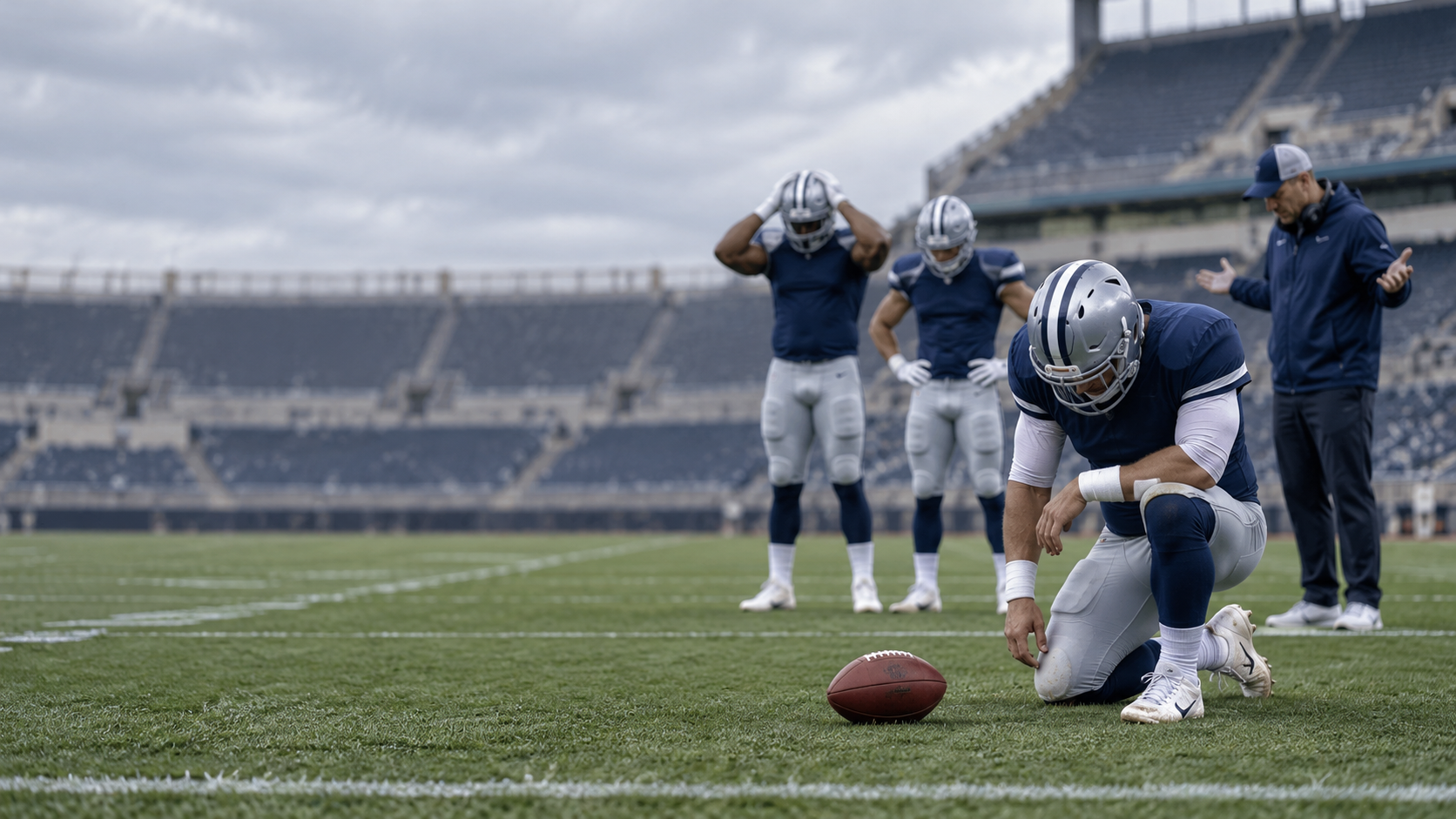
The Dallas Cowboys suffered one of the week’s most damaging setbacks in a dreadful loss to the Green Bay Packers. Sports Illustrated’s Week 6 report card portrayed Dallas as having regressed significantly across several important areas. Source 7
The loss appeared more damaging than an ordinary defeat because it raised concerns about Dallas’ overall quality and direction. The Cowboys did not simply lose momentum; they created doubts about whether the team is improving at all.
The relevant evaluation areas include:
- Coaching and game management
- Offensive execution
- Defensive performance
- Quarterback play
- Special teams
- Overall competitiveness
The available source summary does not provide specific grades, so assigning them would go beyond the evidence. The broader assessment is enough to explain Dallas’ place among the losers: the Cowboys left Week 6 looking less like a team navigating a difficult stretch and more like a team moving backward.
New York Giants
The New York Giants entered the loser column because of turmoil at both quarterback and running back. Source 3 identified uncertainty at those positions, creating broader questions about the structure and direction of the offense. Source 3
Quarterback uncertainty affects leadership, decision-making, and offensive direction. Running back uncertainty complicates workload distribution, offensive balance, and player roles. Together, the issues create more than two personnel questions; they affect the Giants’ entire offensive identity.
New York now faces reduced continuity, more complicated game planning, and greater pressure on its coaches and roster decision-makers. The key takeaway is that the problem is not limited to one position. Questions at quarterback and running back indicate instability across the offensive structure.
Coaches on the Hot Seat After Week 6
The middle portion of the season often changes how front offices evaluate coaches. By Week 6, organizations have enough evidence to compare preseason expectations with actual performance. USA Today identified three coaches whose jobs appeared increasingly at risk and described their situations as potential breaking points. Source 9
Factors that increase job pressure typically include:
- Repeated losses
- Poor player development
- Inconsistent execution
- Weak in-game adjustments
- Declining locker-room confidence
- Failure to meet preseason expectations
Being described as “on the hot seat” does not guarantee an immediate firing. It signals organizational concern and raises the question of whether the current staff can change the team’s direction.
Executives will evaluate the next several games by asking whether the team is improving, whether players are responding to the coaching staff, whether the roster has a clear identity, and whether losses are caused mainly by execution, strategy, or both.
What NFL Week 6 Revealed
Winning Requires More Than Talent
The week emphasized execution, consistency, and organizational alignment. The Browns gained credibility because their progress suggested a departure from past self-inflicted problems. The Eagles faced greater scrutiny because their listless performance reinforced concerns about urgency.
Strong organizations turn talent into repeatable performance. They maintain clear responsibilities, respond to setbacks, and prevent one poor result from becoming a pattern. The difference between Cleveland and Philadelphia was not merely the result; it was the direction each team appeared to represent.
Reputations Can Change Quickly
Week 6 reshaped several narratives:
- Cleveland gained credibility in the AFC North.
- Dallas lost momentum after its loss to Green Bay.
- Philadelphia faced deeper organizational scrutiny.
- New York entered a period of offensive uncertainty.
- Several coaches moved closer to the hot seat.
These narratives remain fluid. One week rarely determines an entire season, but it can expose recurring problems and alter expectations.
Organizational Stability Is a Competitive Advantage
Coaching, quarterback play, and roster roles are connected. Teams with clear responsibilities can respond more effectively to adversity, while teams dealing with low energy, uncertain positions, unclear authority, or conflicting expectations face a more difficult path.
The Giants’ quarterback and running back turmoil illustrates the effect of unclear roles. The Eagles’ repeated listless performances raise questions about leadership and preparation. Dallas’ regression puts pressure on every major performance area. Cleveland, meanwhile, benefits from a perception that it avoided the organizational patterns associated with its past.
Stability does not guarantee success, but it gives a team a stronger foundation from which to pursue it.
Summary
Biggest winner: Cleveland Browns. Cleveland strengthened its AFC North position and improved the perception that it can avoid the mistakes associated with past Browns teams. Source 3
Biggest loser: Philadelphia Eagles. Another listless performance increased speculation about major organizational changes and intensified concerns about preparation, consistency, and accountability. Source 1
Most concerning regression: Dallas Cowboys. Dallas suffered a dreadful loss to the Packers, with the accompanying assessment portraying the Cowboys as having regressed significantly. Source 7
Most unstable situation: New York Giants. Uncertainty at quarterback and running back created questions about offensive continuity, personnel decisions, and coaching direction. Source 3
Biggest coaching storyline: Three coaches reportedly moved closer to the hot seat. Week 6 became a potential evaluation point, although the reporting does not confirm that any coach will be dismissed. Source 9
Conclusion
The Browns emerged from NFL Week 6 with momentum, improved divisional standing, and greater credibility. The Eagles faced increasingly difficult questions after another listless loss. The Cowboys appeared to be regressing after a dreadful defeat to Green Bay, while the Giants entered a more unstable offensive situation because of uncertainty at quarterback and running back.
The most important issue is whether Week 6 revealed repeated patterns. Cleveland must prove its progress can continue. Philadelphia must show urgency and cohesion. Dallas must demonstrate that its regression can be reversed. New York must establish clearer offensive roles. Coaches under pressure must provide evidence that their teams are improving and responding.
Week 7 will begin answering those questions. Some teams will respond to the lessons of Week 6; others may continue toward larger organizational changes.
Frequently Asked Questions
Who was the biggest winner of NFL Week 6?
The Cleveland Browns were among the biggest winners because they strengthened their position in the AFC North and improved the perception that they can avoid the mistakes associated with past Browns teams.
Why were the Philadelphia Eagles among the biggest losers?
The Eagles suffered another listless loss, increasing concerns about preparation, consistency, accountability, and organizational direction. Continued underperformance could lead to major changes.
What happened to the Dallas Cowboys in Week 6?
The Cowboys suffered a dreadful loss to the Green Bay Packers. The result led to an assessment that Dallas had regressed significantly across several areas.
What issues were affecting the New York Giants?
The Giants faced turmoil at quarterback and running back. That uncertainty created questions about offensive continuity, personnel decisions, and the coaching staff’s direction.
Which NFL coaches are on the hot seat after Week 6?
One Week 6 analysis identified three coaches whose jobs appeared increasingly at risk. The reporting framed their situations as potential breaking points, but the results alone do not confirm that any coach will be dismissed.
Can Week 6 determine a team’s entire season?
Week 6 rarely determines an entire season, but it can expose recurring problems and change organizational expectations. The next several games will show whether these teams are following temporary trends or more permanent paths.
Artikel Terkait
-
 Jalen Hurts Reportedly Out After Blood Clots Reach Lungs
-
 Colts Fire GM Chris Ballard After Titans Loss
-
 Eagles vs. Panthers Week 6: Game Ball and Snap Counts
-
 Bills Report Card: Josh Allen Rescues Buffalo
-
 Are the Rams and Chargers the NFL’s Biggest Disappointments?
-
 Why the Cowboys’ Worst Start in Years Feels Familiar