Orbiter Finds Possible Volcanic Activity on Mars
Orbiter Finds Possible Volcanic Activity on Mars
Evidence of Possible Present-Day Volcanism
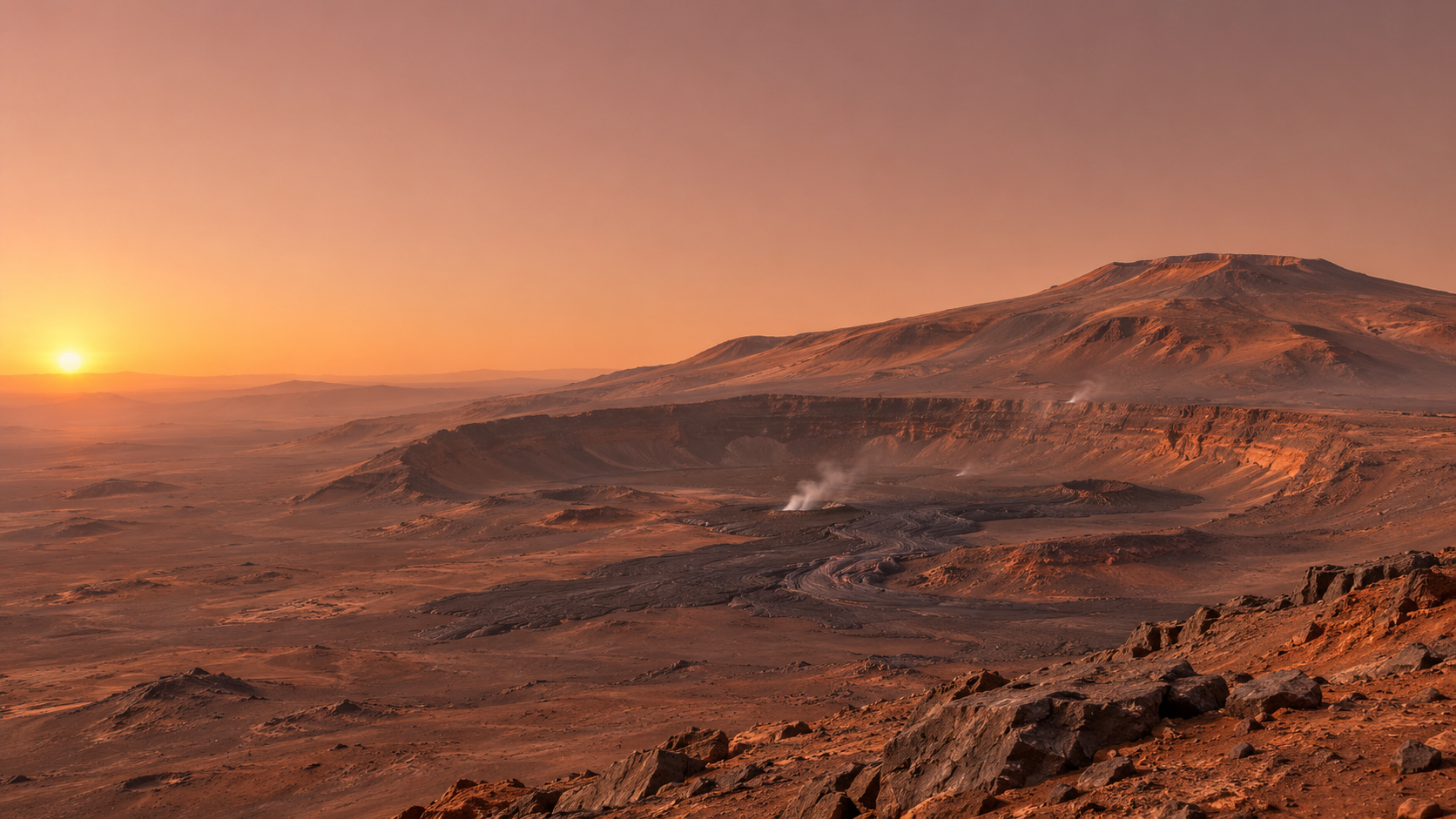
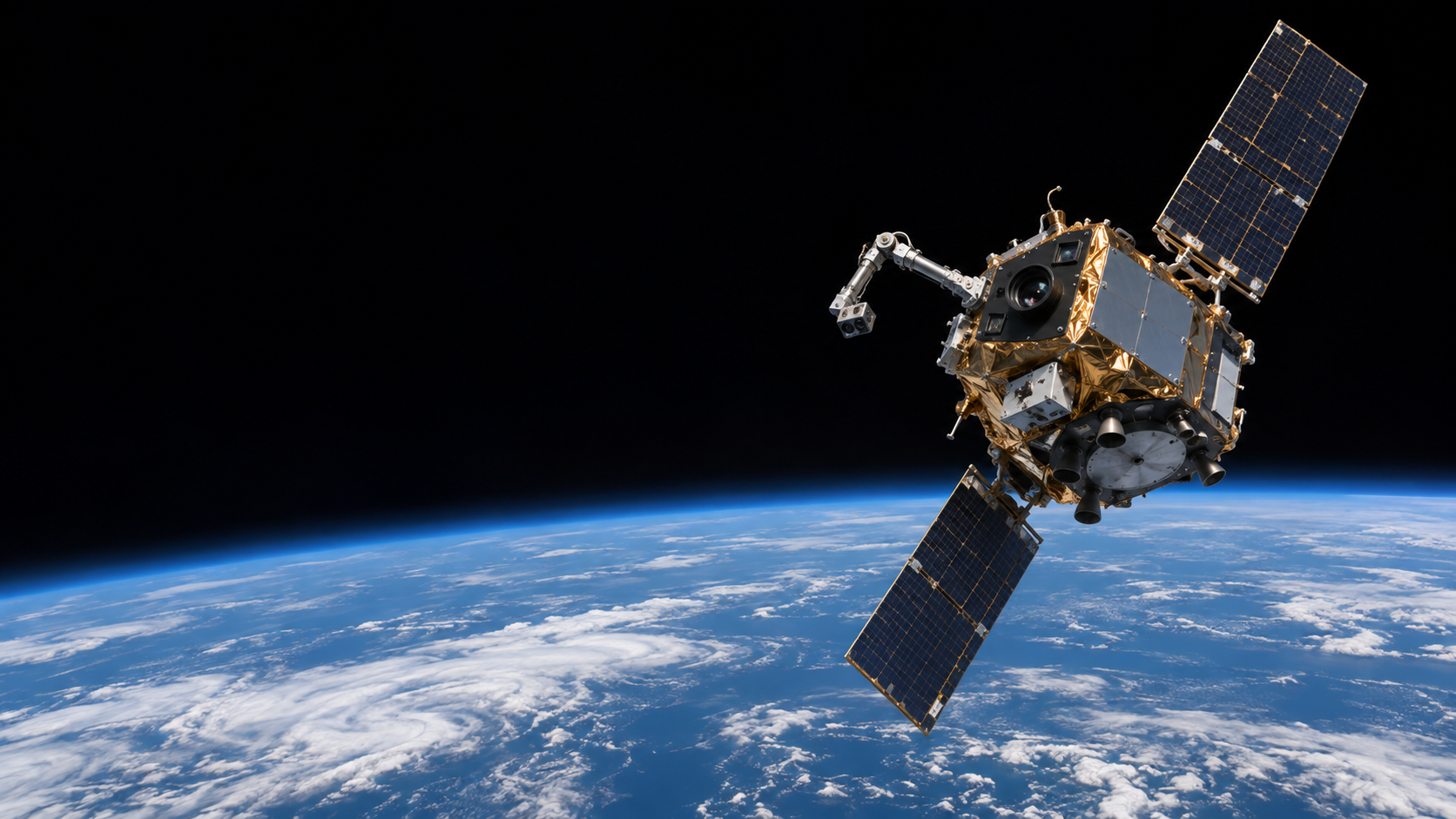
Mars may not be as geologically quiet as it appears. A European Mars orbiter has reportedly detected signs consistent with gas escaping from the planet’s surface near Alba Mons, one of Mars’s largest volcanic regions. The observation raises the possibility that underground geological processes remain active today. Source 1
The finding matters because Mars is often described as a cold, dry world whose major geological activity ended billions of years ago. Its enormous volcanoes and lava plains are generally regarded as remnants of a more active past. If gases are moving from the interior toward the surface, however, Mars could retain pockets of heat, chemical activity, or pressure beneath its crust.
The observation does not confirm an active eruption. It does not show flowing lava, prove that magma is moving, or establish that Alba Mons is erupting. Instead, it represents an indirect clue requiring repeated measurements and independent confirmation. Reports describe the signal as possible volcanic gas leakage or evidence of underground geological activity, not as proof of an active volcano. Source 5
What the Orbiter Detected
Available reports describe a possible gas leak near the Alba Mons volcanic region. The summaries do not identify the gas, provide its concentration, name the instrument, give the exact observation date, or list precise coordinates. Those details should not be treated as established until they appear in the original research paper or official mission documentation.
A gas signal near an ancient volcano could have several explanations. It might indicate heat or magma beneath the surface, chemical reactions within rocks, pressure in an underground reservoir, or gases released from ice and minerals. Atmospheric circulation could also transport and concentrate gases far from their source.
The key distinction is between detecting a gas and identifying its origin. Orbital instruments can detect chemical signatures in the atmosphere or observe changes associated with surface emissions, but they cannot automatically prove that magma produced the signal. A gas plume may show that material is moving through or from the surface; it is not direct evidence of flowing lava.
Possible explanations include:
- Magma releasing volatile compounds beneath the crust.
- Heat-driven reactions involving rocks, ice, and buried fluids.
- Gas escaping through fractures or ancient volcanic conduits.
- Seasonal release from frozen deposits.
- Atmospheric circulation concentrating gases in one region.
- A meteorite impact or other surface disturbance.
- An instrumental or data-processing artifact.
Scientists must examine the gas composition, location, temperature, timing, concentration, and persistence. A signal that repeatedly appears at the same site would be more significant than a single detection. A seasonal signal might indicate a surface or atmospheric process rather than deep volcanism.
Why Orbital Observations Matter
A Mars orbiter can examine regions too large or difficult for a rover to reach. It can revisit the same area, compare observations across seasons, and study relationships between surface features and atmospheric changes.
Orbital spacecraft can investigate mineral composition, atmospheric gases, surface temperature, geological fractures, lava flows, volcanic deposits, dust movement, and structures associated with faults or buried channels.
Repeated measurements are especially important. A persistent signal would suggest an ongoing source. A seasonal signal could point to interactions among the atmosphere, surface ice, and minerals. A localized signal near a fracture or volcanic vent would strengthen the geological interpretation, although it still would not prove that magma is moving.
Orbital data also have limits. A chemical signature detected from above does not necessarily reveal how deep its source lies or distinguish material released from the crust from gas redistributed by winds. Surface instruments, seismic measurements, and laboratory analysis would provide stronger evidence.
Alba Mons: The Region at the Center of the Findings
Alba Mons is one of Mars’s largest volcanic features. Unlike the sharply rising shield volcanoes associated with Olympus Mons, it is broad and low-profile, with gentle slopes and a volcanic footprint extending across a vast area.
Its shape reflects the conditions under which Martian volcanoes formed. Mars has lower gravity than Earth, and its crust did not experience the same plate-tectonic recycling. Lava could therefore spread across a wide area while the volcano remained above a relatively stable part of the crust.
Alba Mons contains extensive lava flows, fractures, ridges, and other tectonic features. These structures preserve evidence of repeated volcanic and crustal processes, helping scientists reconstruct how heat and magma moved through the Martian crust in the past.
The location strengthens a volcanic interpretation, but it does not establish one. Ancient volcanic terrain may contain porous rock, trapped gases, or minerals that respond to changes in temperature and pressure. The strongest evidence would combine the possible gas detection with geological context, such as a nearby fracture, thermal anomaly, or young volcanic deposit.
How Gas Could Indicate Underground Activity
Magma contains volatile compounds dissolved under pressure. When magma rises, cools, or experiences changing pressure, those compounds can separate from the melt and form gases. On Earth, volcanic systems commonly release water vapor, carbon dioxide, sulfur compounds, and other volatiles.
A similar process could occur on Mars, although the composition of any Martian gas must be confirmed by measurement. Gas from a deep source could travel through cracks, fault zones, porous volcanic rock, buried lava channels, old conduits, or fractures created by thermal and tectonic stress.
If gas reaches the atmosphere, it could provide indirect evidence that heat or chemical activity persists underground. A leak would not necessarily require an eruption; small amounts of gas could migrate through the crust without visible surface changes.
The strength of the volcanic explanation would depend on the gas’s identity and behavior. Scientists would also look for accompanying heat, ground deformation, seismic activity, or mineral changes.
Alternative Explanations
Volcanism is only one possible explanation. Chemical reactions between rocks and buried ice could produce gases without magma. Mineral decomposition may release trapped compounds when temperatures change. Seasonal warming could free gas from frozen deposits or porous soil. Atmospheric circulation could transport and concentrate gases far from their original source.
Other possibilities include:
- Decomposition of surface minerals.
- Release from polar or subsurface ice.
- Chemical interactions among water, ice, and rock.
- Meteorite impacts.
- Dust storms and surface disturbance.
- Atmospheric compression or circulation.
- Instrument calibration problems.
- Errors introduced during data processing.
The phrase “possible volcanic activity” is therefore more accurate than “Mars has an erupting volcano.” The first describes an interpretation under investigation. The second claims a confirmed event that current reports do not establish.
Is Mars Volcanically Active Today?
Mars has some of the largest volcanoes in the Solar System, but most visible lava flows formed in the distant past. This does not mean every geological process stopped at the same time. Planetary cooling can be uneven, leaving some regions warmer or more active than others.
Scientists continue to investigate recent activity because some Martian volcanic surfaces appear relatively young, Mars experiences marsquakes, heat may remain in parts of the interior, and subsurface ice and fluids can react with rocks. Faults and fractures may also continue to accommodate stress.
“Recent” has a specialized meaning in planetary science. It can refer to events that occurred millions of years ago, even though that period is ancient by human standards. “Ongoing” requires evidence that a process operates now or appears in the recent observational record.
The reported detection does not establish a lava eruption, visible volcanic plume, confirmed magma chamber, or specific eruption date. Independent observations are needed before researchers revise the established view of Mars’s geological activity.
What the Finding Could Reveal
A confirmed gas leak would not directly measure Mars’s internal temperature, but it could indicate that some regions remain thermally or chemically active. The signal might reveal a pathway through which heat, fluids, or volatile compounds move toward the surface.
Heat beneath the surface could interact with underground ice or minerals, potentially melting small amounts of buried ice or creating chemical energy gradients. These environments could be valuable for studying past or present habitability, but they would not prove that liquid water or life exists at the suspected site.
New evidence of gas release could also refine estimates of when Mars last experienced major eruptions, crustal deformation, gas movement, or hydrothermal activity. It may suggest that Mars did not simply transition from a volcanic planet to a completely dormant world, but instead retained localized activity as its interior cooled.
How Scientists Could Confirm the Finding
Follow-up orbital observations could determine whether the signal:
- Reappears in the same location.
- Changes with Martian seasons.
- Correlates with surface temperature or atmospheric pressure.
- Spreads in a pattern consistent with a plume.
- Appears near fractures or thermal anomalies.
- Persists across different instruments.
A rover or lander could directly measure soil and rock chemistry, gas composition, surface temperature, seismic activity, and magnetic or electrical properties. A seismometer could detect underground movement, fractures, or fluid migration, while a drill could determine whether chemical signatures change with depth.
Laboratory analysis of returned samples could provide additional evidence about volcanic minerals, trapped gases, hydrothermal alteration, and the age of nearby deposits. A sample-return mission from Alba Mons is not established by the available sources and remains a future possibility.
Why This Matters for Future Exploration
Potential geological activity could make volcanic regions important targets for future missions. Scientists may prioritize sites with exposed volcanic rocks, fractured terrain, possible subsurface heat, mineral alteration, or accessible geological layers.
Underground volcanic systems could preserve evidence more effectively than exposed surfaces, which are altered by radiation, dust, and extreme temperature changes. Such environments might offer heat, chemical energy, fractured rock, temporary water, and protection from surface radiation.
These conditions could make a region potentially habitable, but they would not demonstrate that life exists or existed there. Future missions would need to search for biological evidence while testing nonbiological explanations.
What the Evidence Does and Does Not Show
The available reports support several cautious conclusions:
- A European orbiter has reportedly detected evidence consistent with possible gas release near Alba Mons.
- The observation raises the possibility of recent or ongoing subsurface geological activity.
- The finding could influence models of Mars’s interior and volcanic history.
- Repeated observations and independent confirmation are needed.
Reports describe the finding as a hint of volcanic activity and possible gas leakage, not a confirmed eruption. Source 3
The available information does not confirm:
- An active volcano on Mars.
- A current lava eruption.
- A known magma chamber beneath Alba Mons.
- A visible volcanic plume.
- The identity or concentration of the gas.
- A precise release date.
- A biological connection.
- A permanent source of liquid water.
Conclusion
The European orbiter’s reported observation provides a fresh clue in the search for volcanic activity on Mars. Possible gas escaping near Alba Mons could indicate underground heat, chemical reactions, or another geological process. It could also result from seasonal, atmospheric, or instrumental effects.
The finding directs attention below the Martian surface. Mars may appear cold and inactive while localized processes continue beneath its crust. If future observations confirm a persistent gas source, scientists may need to revise models of the planet’s interior, volcanic history, and subsurface environments.
For now, the appropriate conclusion is cautious: Mars may still be geologically active in limited regions, but ongoing volcanism has not been confirmed. Orbiters, landers, rovers, seismometers, and laboratory analyses will determine whether the suspected gas reflects volcanism, another subsurface process, or a nongeological explanation. Source 9
Frequently Asked Questions
Is Mars still volcanically active?
Current volcanism has not been confirmed. The reported gas detection suggests possible recent or ongoing geological activity, but repeated and independent evidence is required.
What did the European orbiter detect?
Available summaries describe possible gas escaping from Mars near the Alba Mons volcanic region. They do not provide enough verified information to identify the gas, instrument, concentration, coordinates, or observation date.
What is Alba Mons?
Alba Mons is a massive, broad, low-profile volcano on Mars. Its lava deposits, fractures, and tectonic features make it important for studying Martian geology and ancient volcanism.
Could the gas come from something other than a volcano?
Yes. Possible alternatives include chemical reactions in rocks, seasonal release from ice or minerals, atmospheric circulation, meteorite impacts, surface disturbances, and measurement or data-processing errors.
Does possible volcanic activity mean Mars could support life?
No. Geological activity may create heat, chemical energy, or temporary liquid water, but it does not prove that life exists or ever existed on Mars.
What would confirm ongoing volcanic activity?
Strong confirmation would require repeated gas detections, thermal or seismic evidence, geological changes, or direct observations of lava or volcanic emissions. Surface measurements from a lander or rover would provide stronger evidence than a single orbital signal.