Web Framework Benchmark Results: How to Publish a Table People Steal
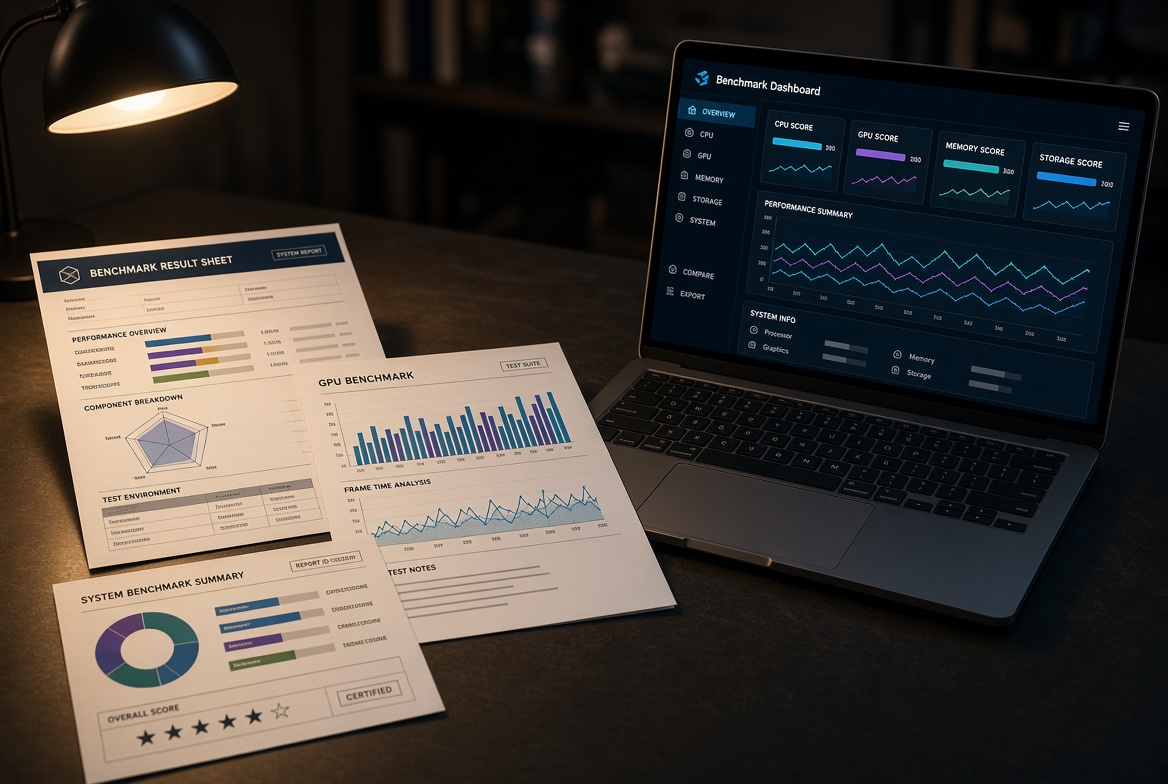
Web framework benchmark results should be a table a busy reader can steal, plus the files behind it. A peak RPS line without p99, errors, and RSS is not results. It is a prompt for an argument.
The table shape
| Stack | Healthy RPS | p50 | p99 | Errors | RSS |
|---|---|---|---|---|---|
| Current API (control) | 6.1k | 2.1 ms | 14.8 ms | 0.00% | 410 MB |
| Candidate idiomatic | 9.4k | 1.4 ms | 7.9 ms | 0.00% | 180 MB |
| Candidate plus APM | 8.0k | 1.7 ms | 11.2 ms | 0.00% | 240 MB |
Healthy RPS is the last point before a guardrail trips, not the peak of a death spiral. The APM row is not optional. Web framework benchmark results that omit the agent will not match production. Attach the histogram, the client command, and the commit. If a vendor cites your study, they should be forced to cite the guardrails.
When public rows disagree
List payload size, TLS, database, keepalive, and hardware. Disagreement is information. It is not an insult to the public suite. Publish the differences in the same memo as the numbers so web framework benchmark results cannot be copy-pasted without context.
Archive negatives
Store raw files even when the conclusion is do nothing. Negative results prevent the same proposal from returning next quarter in a new slide template. Institutional memory is a performance feature.
Reading the table: how to interpret web framework benchmark output. Building the suite: custom web framework benchmark.
FAQ
Mean or median RPS? Median of accepted trials. Means flatter one wild run.
Can we drop RSS? Not if the candidate wins speed by leaking.
Put guardrails in the screenshot. That is how web framework benchmark results stay honest after they leave the lab. If the screenshot cannot fit the error column, link the full table instead of cropping.
Mistakes people make around web framework benchmark results
The first mistake is treating web framework benchmark results as a slogan instead of a scoped experiment. The second is copying a command from a chat log without pinning the client version. The third is publishing a peak while dropping the error column. Any one of those three will make a later review of web framework benchmark results feel like starting over.
A fourth mistake is mixing clusters. The seed web framework benchmark is allowed to inform this page. A composite from an unrelated seed is not allowed to finish the claim. If someone pastes a plaintext crown into a discussion of web framework benchmark results, ask which protocol, which payload, and which error gate they used. If they cannot answer, the paste is decoration.
A fifth mistake is skipping warm-up and then blaming the framework. JIT runtimes, page cache, and TLS session tickets all distort the first seconds. How you treat those seconds is part of web framework benchmark results whether or not the original brief mentioned them.
Checklist before you claim web framework benchmark results
- One-sentence hypothesis that contains the phrase web framework benchmark results or an equivalent measurement goal.
- Frozen artifact: digest, flags, workers, runtime version.
- Client and server on disjoint cores or separate machines.
- Warm-up that is not scored.
- At least three accepted samples with an error gate.
- p50, p95, p99, successful RPS, RSS, and the exact command.
- A note on whether the client or the server hit the wall first.
- A link to sibling long-tails in the web framework benchmark cluster.
If a box on that list is empty, you are not done with web framework benchmark results. You are drafting. Drafts can live in a branch. They should not live in a decision memo.
Who owns web framework benchmark results inside a company
Give the work a code owner. Platform teams usually own the harness. Product teams usually own the hypothesis, because only they know which route is expensive. Finance does not own web framework benchmark results, but they will quote it. Write the sentence they are allowed to quote and put it at the top of the report.
On-call owns the dashboard that web framework benchmark results is supposed to move. If on-call cannot find the panel in two minutes, the study will not change operations. That is not a documentation nit. That is how laboratory work dies after the launch channel goes quiet.
Security and privacy review the payload and the logs. A test that ships real user bodies into a load generator is not a study of web framework benchmark results. It is an incident with extra steps. Use synthetic documents that match production shape.
Worked example in the web framework benchmark cluster
Suppose two engineers disagree about web framework benchmark results after a runtime bump. They rerun the same pinned command on the reserved instance family. One run is client bound. The other used HTTP/2 without saying so. After both mistakes are labeled, the delta shrinks to a number that no longer funds a rewrite. That outcome is a success. Studies that only count rewrites as success will stay loud and stay wrong.
Suppose instead the rerun confirms a 35% p99 improvement on the route that is 40% of CPU. Then web framework benchmark results has earned a migration design, not a migration. The design still needs an APM row, a rollback, and a field check. Lab wins that skip those three become next quarter’s incident review.
Keep raw JSON next to the Git SHA. If you cannot point at a file, you do not have a result for web framework benchmark results. You have a memory. Memories do not survive staffing changes. Put the file path in the ticket before the meeting so the meeting cannot become a debate about vibes.
If this page is the first time someone on the team has seen the phrase web framework benchmark results, send them the seed overview for web framework benchmark after they finish the checklist, not before. Reading the cluster in the wrong order is how long-tails collapse back into a single generic argument. Keep the long-tail sharp. That is the only reason this article exists as its own URL.